
 K-4
K-4P DOERRFELD
Beneath
by Cori Doerrfeld
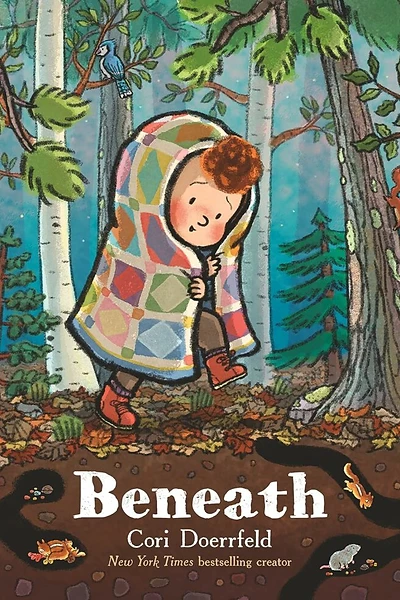
Pacing MaterialA child wrapped in a quilt walks through the forest, discovering that what lies beneath the surface — in the ground, in the trees, and within ourselves — holds both surprises and comfort.
Big Idea
There is always more beneath the surface — if we are brave enough to look.
Discussion Questions
- 1.What does the child find beneath the ground?
- 2.What do you think the quilt represents?
- 3.How do the animals in the forest help tell the story?
- 4.What does 'beneath' mean in this story — both literally and figuratively?
- 5.When have you discovered something surprising beneath the surface?
Classroom Activity
What Lies Beneath
Students create a cross-section illustration showing what's above and below ground in a natural setting, inspired by the book's exploration of hidden worlds.
Lesson Plan
Learning Goals
- Identify layers in natural environments (surface, underground)
- Use visual representation to communicate understanding
- Develop observational skills through close looking
- Connect literal and figurative meanings in literature
Activity Steps
- 1.Read the book, pausing to notice the underground cross-sections.
- 2.Discuss what lives above and below the ground in a forest.
- 3.Give students paper folded in half — above ground on top, below on bottom.
- 4.Have students draw and label what they'd find in each layer.
- 5.Share illustrations and discuss the theme of looking beneath the surface.
Standards Connections
- ELA: RL.K.1 — Ask and answer questions about key details
- ELA: RL.K.2 — Retell stories, including key details
- ELA: RL.K.3 — Describe characters, setting, and events
- ELA: RL.4.6 — Acknowledge differences in characters' points of view
- ELA: SL.K.1 — Participate in collaborative conversations about the text
- ELA: W.K.3 — Write narratives recounting events with descriptive details
- SEL: Self-Management
- SEL: Responsible Decision-Making
- Art: VA:Re7 — Perceive and analyze artistic work
Pace-Write-Read Study with Pace-Write It!
Focus question: How does an author slow down a story to help readers feel grief, wonder, and hope? In Beneath by Cori Doerrfeld, a child wrapped in a quilt walks quietly through the woods and notices what is hidden under roots, soil, and silence. The pacing is gentle and unhurried, using page turns, repeated observations, and reflective language to invite readers to pause and think about what lies beneath the world and beneath our feelings.
| Element | How to notice or teach it in the novel |
|---|---|
| Pace | Read: Notice how Beneath moves slowly, matching the child’s careful walk through the forest and the tender theme of grief turning toward hope. Classroom Activity: Write 3-4 short sentences about a slow walk where a character notices one thing at a time and ends with a hopeful thought. |
| Plot | Read: The plot is quiet and simple: the child moves through the woods and discovers that beneath the ground, trees, and feelings, life and comfort continue. Classroom Activity: Make a beginning-middle-end chart for this book, then write your own simple plot about discovering something hidden beneath the surface. |
| Prosody | Read: Listen to how the language in Beneath sounds calm, soft, and thoughtful when read aloud, supporting the emotional mood of grief and hope. Classroom Activity: Read one page aloud with a partner, then write 2 lines that are meant to sound gentle and soothing when spoken. |
| Word pause | Read: Notice where single important words or short phrases create a pause, giving readers time to think about loss, nature, and comfort. Classroom Activity: Write a sentence about sadness or hope and add a line break or extra pause before the most important word. |
| Concept | Read: The big concept in Beneath is that hidden things matter—beneath soil, beneath bark, and beneath sadness there can be life, memory, and healing. Classroom Activity: Write about one thing that has something important hidden beneath it, and explain what that hidden part means. |
| Voice & World View | Read: Cori Doerrfeld’s voice is quiet, caring, and observant, showing a worldview that nature can help us understand hard feelings. Classroom Activity: Write 3 sentences in a calm, comforting voice about a place that helps a character feel less alone. |
| Setting & Place | Read: The forest setting shapes the pacing by encouraging slow looking; roots, earth, trees, and open spaces all support reflection. Classroom Activity: Describe an outdoor setting in 4 sensory details that would make a reader slow down and look carefully. |
| Point of View | Read: Notice how the story stays close to the child’s experience, helping readers see the world through a grieving child’s quiet observations. Classroom Activity: Write from the point of view of a child noticing something in nature that connects to an inside feeling. |
| Original Characters | Read: The child in the quilt stands out as a memorable character because the quilt suggests comfort, protection, and love during grief. Classroom Activity: Invent a character who carries or wears one comforting object, and write how that object helps during a hard day. |
| Dialogue | Read: Beneath relies more on reflection than conversation, which slows the pace and creates a thoughtful mood. Classroom Activity: Write a scene with very little dialogue—only 1 line of speech—and use actions and observations to show the feeling instead. |
| Details | Read: Small details from the natural world help build meaning, showing that tiny hidden things beneath the surface are important. Classroom Activity: List 5 small details someone might notice on a forest walk, then use 3 of them in a short paragraph. |
| Descriptions | Read: The descriptions in Beneath are gentle and layered, connecting physical things under the earth with emotional truths inside a person. Classroom Activity: Write 3 descriptive sentences about something in nature and connect each one to a feeling. |
| Strong First Lines | Read: Notice how the opening quickly creates a reflective mood and invites readers into the child’s quiet journey. Classroom Activity: Write an opening line for a story about loss or change that makes the reader want to keep walking with the character. |
| Immediacy & Engagement | Read: Even though the pace is slow, the book keeps readers engaged by asking them to keep discovering what lies beneath each new part of the world. Classroom Activity: Write 4 sentences that each reveal one new hidden thing so the reader wants to know what comes next. |
| Story Scenes & Summaries & Unique Structures | Read: The book uses a patterned structure of observation and reflection instead of fast action, which creates a meditative reading experience. Classroom Activity: Create a patterned piece that begins three times with the same words, each time revealing a new hidden layer. |
| Flashback & Flash Forward & Cliffhangers | Read: Beneath does not depend on cliffhangers; instead, its pacing comes from quiet unfolding in the present moment, though readers may sense memories beneath the child’s sadness. Classroom Activity: Write a brief present-moment scene and add 1 sentence that hints at a memory causing the character’s feeling. |
| Tension & Suspense & Surprise | Read: The tension is emotional rather than scary—readers wonder what the child will discover and how those discoveries may bring comfort. Classroom Activity: Write a short piece where the surprise is not dangerous but comforting, such as finding hope in an unexpected place. |
| Page Turns and Chapter Breaks | Read: In a picture book like Beneath, page turns matter because each turn can reveal another hidden layer under the forest floor or inside the child’s heart. Classroom Activity: Plan a 4-page picture book and write what the reader discovers after each page turn. |
| Performance | Read: When performed aloud, the story calls for a soft, steady voice with pauses that honor grief and wonder. Classroom Activity: Practice reading one section aloud, marking where your voice should slow, soften, or pause, then write a line meant to be performed that way. |
| Personality | Read: The child’s personality comes through as observant, quiet, and open to comfort, even without lots of action or dialogue. Classroom Activity: Show a character’s personality through what they notice on a walk instead of telling the trait directly. |
| Humor | Read: Beneath is not focused on humor; its seriousness helps maintain the emotional pacing around grief and hope. Classroom Activity: Write 2 serious sentences about a meaningful moment without adding jokes, and explain how that changes the mood. |
| Pause | Read: Pauses are essential in this book because they give readers room to think about what is hidden beneath sadness and beneath the earth. Classroom Activity: Write a 5-line piece and intentionally place a pause after line 2 to let the most important idea settle. |
| Poetry and Poetic Devices | Read: The book has a poetic feel, using metaphor-like connections between nature and inner life to deepen meaning. Classroom Activity: Write a simile or metaphor comparing a feeling to something under the ground, such as roots, seeds, or stones. |
| Repetition | Read: Repeated ideas about what lies beneath help unify the book and create steady, comforting pacing. Classroom Activity: Write 4 lines that repeat the phrase “Beneath the…” and reveal a different hidden truth each time. |
| Rhythm | Read: The rhythm is smooth and measured, like walking step by step through the woods with the quilt wrapped around the child. Classroom Activity: Write 3 sentences with a repeated sentence pattern that sounds like slow footsteps. |
| Punctuation | Read: Notice how punctuation can help the text breathe, slow down, and feel reflective rather than rushed. Classroom Activity: Rewrite a short sentence about the forest in two ways—once with commas for a slow flow and once with a period for a strong stop. |
| Questions | Read: Readers may ask themselves what is hidden beneath the child’s sadness and what nature is teaching about healing. Classroom Activity: Write 3 thoughtful questions a reader could ask while reading this book, then answer 1 of them in writing. |
| Compare-Contrast | Read: The story invites compare-contrast thinking between what is seen above ground and what exists beneath, and between outer quiet and inner feeling. Classroom Activity: Make a T-chart for “Above” and “Beneath,” then write a paragraph comparing the two. |
| Objects | Read: The quilt is an important object because it suggests warmth, memory, and protection while the child moves through grief. Classroom Activity: Choose one meaningful object for a character and write how it changes the mood of a scene. |
| Threes | Read: Think about how grouping ideas in threes can make reflective writing feel complete and musical, fitting the style of Beneath. Classroom Activity: Write about 3 things a character notices in nature and 3 feelings those things awaken. |
| Whitespace & Negative Space | Read: In a picture book like Beneath, open space on the page can slow the reader and leave room for emotion, especially around hard topics like grief. Classroom Activity: Draft a page with only 1-2 short sentences and decide where blank space should help the reader pause. |
| Art & Graphics | Read: The illustrations help carry the pacing, mood, and meaning by showing the child, the quilt, and the hidden life of the forest in a gentle visual sequence. Classroom Activity: Sketch a simple page for a story about hope, then write 1 sentence that matches the picture’s mood. |
| Interactives & Gamification | Read: This book naturally invites a noticing game: readers can search for what is visible above and imagine what is hidden beneath, deepening engagement with the theme. Classroom Activity: Create a class “Above/Beneath” matching activity, then write one original pair such as “Above the leaves… beneath the roots…”. |
Pace-Write It!
20-Minute Classroom Flow\nRead (5 min): Read Beneath by Cori Doerrfeld aloud. Pause at key page turns to let students study how the child, the quilt, and the forest create a slow, thoughtful mood.\nNotice (5 min): Ask: What does the author help us notice slowly? Chart student ideas under two headings: “Above” and “Beneath.” Highlight how repeated structure, page turns, quiet description, and pauses help readers feel grief and hope.\nWrite (7 min): Students write their own short reflective piece inspired by the book. Writing frame: “Above the ______, I see ______. Beneath the ______, there is ______. It reminds me that beneath ______, there can be ______.” Encourage students to write 3 connected lines using nature and feeling.\nShare (3 min): Partners read their pieces aloud in soft voices and listen for the line that feels most hopeful. Invite 2-3 students to share with the class.\nExit ticket: Write one sentence answering: How did slowing down your writing help show a feeling?