 K-3
K-3P GIANFERRARI
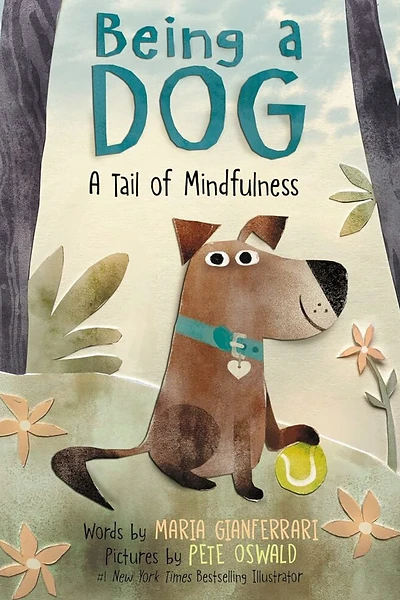
Being a Dog
by Maria Gianferrari
Pacing MaterialA gentle meditation on mindfulness, showing how a dog experiences the world moment by moment — and inviting us to do the same.
Big Idea
Mindfulness helps us slow down and notice the world around us — just like a dog does.
Discussion Questions
- 1.What does the dog notice that humans might miss?
- 2.What does it mean to be 'mindful'? How can mindfulness help us?
- 3.When do you feel most calm? What helps you slow down?
- 4.How is being a dog different from being a human? How is it the same?
- 5.What would you notice if you slowed down like a dog?
Classroom Activity
Mindful Moments Practice
Students practice a 3-minute guided mindfulness exercise, then draw their 'happy place' — a place where they feel calm and safe.
Lesson Plan
Learning Goals
- Understand and practice mindfulness techniques
- Develop self-regulation strategies
- Use sensory details in observation and writing
- Make text-to-self connections about emotions
Activity Steps
- 1.Have students sit comfortably with eyes closed.
- 2.Guide them through 3 minutes of slow breathing: in through the nose, out through the mouth.
- 3.Ask students to picture a place where they feel calm and happy.
- 4.After the exercise, students draw their 'happy place.'
- 5.Students write one sentence: 'I feel calm when I am at ___.'
- 6.Volunteers share their drawings.
Standards Connections
- ELA: RL.K-3.6 (Point of View)
- ELA: W.K-3.3 (Narrative Writing)
- SEL: Self-Regulation and Mindfulness
- Health: Mental Wellness
Pace-Write-Read Study with Pace-Write It!
Focus question: How does a slow, mindful pace help readers notice the world the way a dog does? In Being a Dog by Maria Gianferrari, the reader follows a dog through simple, present-moment experiences like smelling, listening, resting, and moving through the day. The book uses calm language, gentle repetition, and spacious moments to slow the reading down so children can feel mindfulness on the page.
| Element | How to notice or teach it in the novel |
|---|---|
| Pace | Read: Notice how Being a Dog moves slowly from one small experience to the next, helping us pause with the dog and pay attention to each moment. Classroom Activity: Write 3 short sentences about one ordinary moment, stretching it out slowly the way the dog experiences it. |
| Plot | Read: Notice that the plot in Being a Dog is simple and quiet; instead of a big problem, the story follows the dog's mindful way of being in the world. Classroom Activity: Write a mini plot about a child or animal having a peaceful day with a beginning, middle, and end. |
| Prosody | Read: Notice how the words in Being a Dog sound smooth and soothing when read aloud, matching the calm feeling of mindfulness. Classroom Activity: Read one page aloud, then write 2 lines of your own that sound gentle and calm. |
| Word pause | Read: Notice where single words or short phrases in Being a Dog make you stop and think, as if the dog is taking in a sound, smell, or sight. Classroom Activity: Write a sentence about noticing something outside and add a word pause with a dash or line break. |
| Concept | Read: Notice that the big idea in Being a Dog is mindfulness—being fully present like the dog as it notices the world moment by moment. Classroom Activity: Write one sentence explaining what mindfulness means, then give one example from your own life. |
| Voice & World View | Read: Notice how Being a Dog shares a warm, observant voice that values quiet noticing and sees the world through wonder instead of hurry. Classroom Activity: Write 3 sentences in a voice that sounds peaceful and curious about the world around you. |
| Setting & Place | Read: Notice how the places in Being a Dog feel close and familiar, giving the dog space to sniff, rest, listen, and simply be. Classroom Activity: Choose a place like a yard, park, rug, or classroom corner and write details that make it feel calm and sensory-rich. |
| Point of View | Read: Notice how Being a Dog invites readers to imagine the dog's experience, helping us see the world from an animal's perspective. Classroom Activity: Write from the point of view of a dog noticing one thing with its nose, ears, eyes, or paws. |
| Original Characters | Read: Notice that the dog in Being a Dog feels special not because it is flashy, but because its quiet attention makes its character memorable. Classroom Activity: Invent an animal character whose special trait is the way it notices the world, and write 3 details about it. |
| Dialogue | Read: Notice that Being a Dog relies more on observation than talking, which keeps the pacing peaceful and inward. Classroom Activity: Write a very short dialogue between a child and a dog where the dog helps the child slow down and notice something. |
| Details | Read: Notice the small sensory details in Being a Dog that help readers feel each moment the dog experiences. Classroom Activity: List 5 tiny details you notice right now, then turn them into 2 descriptive sentences. |
| Descriptions | Read: Notice how Being a Dog uses description to help us feel what the dog might smell, hear, touch, or see in the present moment. Classroom Activity: Write a description of one object or outdoor scene using at least 3 senses. |
| Strong First Lines | Read: Notice how the opening of Being a Dog quickly invites readers into the dog's mindful way of living. Classroom Activity: Write an opening line that starts with a simple action like noticing, listening, smelling, or resting. |
| Immediacy & Engagement | Read: Notice how Being a Dog keeps readers close to the dog's experience so we feel like we are there in the same moment. Classroom Activity: Write 2-3 present-tense sentences that make the reader feel they are inside the moment with you. |
| Story Scenes & Summaries & Unique Structures | Read: Notice that Being a Dog is built from a series of mindful moments instead of one long action scene, creating a gentle structure. Classroom Activity: Write a sequence of 4 tiny scenes from one part of your day, each focused on one thing you noticed. |
| Flashback & Flash Forward & Cliffhangers | Read: Notice that Being a Dog stays mostly in the present instead of jumping backward or forward, which strengthens its mindfulness theme. Classroom Activity: Write one present-moment paragraph, then write a second version with a flashback and compare which one feels calmer. |
| Tension & Suspense & Surprise | Read: Notice that Being a Dog creates interest through attention and discovery rather than danger, showing that surprise can come from noticing ordinary things. Classroom Activity: Write about a quiet surprise, such as hearing a bird, feeling rain, or seeing a bug, in 3 sentences. |
| Page Turns and Chapter Breaks | Read: Notice how page turns in Being a Dog help space out ideas so each new moment can be savored. Classroom Activity: Fold a paper into 4 parts and plan one mindful moment for each section, deciding what readers discover when they turn the page. |
| Performance | Read: Notice how Being a Dog should be performed with a slow, soft voice, pauses, and expression that match the dog's calm attention. Classroom Activity: Practice reading one part aloud as if you are leading a mindfulness exercise, then write one line designed to be read slowly. |
| Personality | Read: Notice the dog's personality in Being a Dog—calm, curious, alert, and content with simple experiences. Classroom Activity: Write a character sketch of a dog or child whose personality shows through the way they notice everyday things. |
| Humor | Read: Notice that any humor in Being a Dog is gentle and affectionate, growing from familiar dog behaviors and loving observation. Classroom Activity: Write a lighthearted sentence about a dog doing something funny while still staying in a calm, mindful mood. |
| Pause | Read: Notice how Being a Dog leaves room for pauses so readers can breathe, think, and notice along with the dog. Classroom Activity: Write 4 lines about one moment and mark where a reader should pause with slashes or line breaks. |
| Poetry and Poetic Devices | Read: Notice how Being a Dog feels poetic, using sensory language and carefully chosen words to make ordinary experiences glow. Classroom Activity: Write a short poem called 'Being a ___' about another animal or about yourself being mindful. |
| Repetition | Read: Notice how repeated ideas and patterns in Being a Dog help create a soothing rhythm and reinforce mindfulness. Classroom Activity: Choose a repeated starter such as 'I notice' or 'Like a dog, I...' and use it in 3 lines. |
| Rhythm | Read: Notice the steady rhythm in Being a Dog, which mirrors breathing, walking, waiting, and resting. Classroom Activity: Write 3 sentences of different lengths that together sound calm and balanced when read aloud. |
| Punctuation | Read: Notice how punctuation in Being a Dog helps control pacing, telling readers when to pause, linger, or move on. Classroom Activity: Write one sentence with commas for a slow list and one sentence with a period after a short idea for a strong stop. |
| Questions | Read: Notice how Being a Dog can make readers ask themselves reflective questions, such as what they notice or how they feel when they slow down. Classroom Activity: Write 2 mindfulness questions a dog might ask a child about noticing the world. |
| Compare-Contrast | Read: Notice the contrast between a dog's slow, sensory awareness in Being a Dog and the fast way people sometimes move through their days. Classroom Activity: Make a T-chart comparing 'being a dog' and 'being in a hurry,' then write 2 comparison sentences. |
| Objects | Read: Notice how ordinary objects and natural things in Being a Dog become important because the dog pays close attention to them. Classroom Activity: Pick one object like a leaf, shoe, bowl, or blanket and write 3 sentences that make it seem interesting through close noticing. |
| Threes | Read: Notice places where ideas in Being a Dog can be grouped in threes, such as three senses, three actions, or three moments, to make the writing feel complete. Classroom Activity: Write a sentence or short poem with 3 noticing actions, such as 'I listen, I sniff, I rest.' |
| Whitespace & Negative Space | Read: Notice how space on the page in Being a Dog helps the story breathe and gives each thought time to settle. Classroom Activity: Write a tiny 4-line piece with few words on each line, leaving space between ideas. |
| Art & Graphics | Read: Notice how the illustrations in Being a Dog work with the words to show the dog's body language, calm mood, and sensory world. Classroom Activity: Draw a simple picture of an animal noticing something, then add one caption that matches the quiet tone of the book. |
| Interactives & Gamification | Read: Notice that Being a Dog invites participation because readers can copy the dog's mindful actions—looking, listening, resting, and breathing. Classroom Activity: Create a 'Be a Dog' challenge card with 3 actions classmates can try, then write one sentence about how each action feels. |
Pace-Write It!
20-Minute Classroom Flow Read (5 min): Read Being a Dog by Maria Gianferrari aloud slowly. Pause to let students notice how the dog experiences the world through smelling, listening, moving, and resting. Notice (5 min): Ask: How does the book slow us down? Chart student ideas such as repetition, sensory details, short phrases, calm page turns, and quiet moments. Revisit one spread and notice how the words and illustrations work together to create mindfulness. Write (7 min): Invite students to write their own mindful moment modeled on the book. Writing frame: 'Like ____, I notice ____. I listen to ____. I feel ____. Right now, I am ____.' Encourage students to choose one small moment from recess, home, the classroom, or outside and stretch it out with sensory details. Share (3 min): Have partners read their writing slowly to each other. Listeners name one word or line that helped them slow down and picture the moment. Exit ticket: Finish this sentence on a sticky note: 'A writer can slow down pacing by ______.'