 K-3
K-3P WOOD
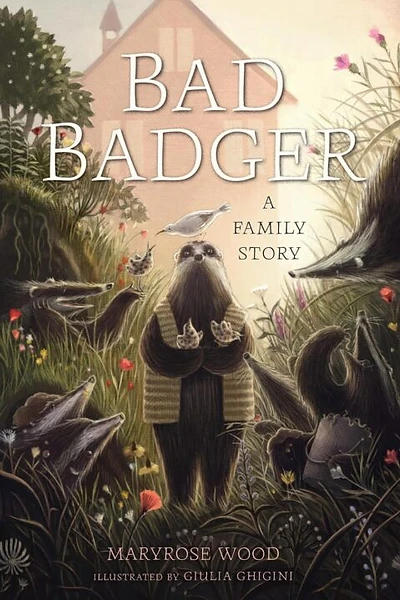
Bad Badger
by Maryrose Wood
Pacing MaterialA grumpy badger learns that family comes in all shapes and sizes — and that even the crankiest hearts can learn to love.
Big Idea
Family means accepting each other — even the parts that seem grumpy or hard to love.
Discussion Questions
- 1.Why is the badger considered 'bad'? Is he really?
- 2.How do the other characters see the badger differently?
- 3.What does the badger learn about family?
- 4.How do the illustrations help tell the story?
Classroom Activity
Badger Family Story
Draw your own badger character and write a short story about a family lesson they learn.
Lesson Plan
Learning Goals
- Explore themes of family and acceptance
- Identify character traits
- Practice storytelling through illustration
Standards Connections
- ELA: RL.K.1 — Ask and answer questions about key details
- ELA: RL.K.2 — Retell stories, including key details
- ELA: RL.K.3 — Describe characters, setting, and events
- ELA: RL.3.6 — Acknowledge differences in characters' points of view
- ELA: SL.K.1 — Participate in collaborative conversations about the text
- ELA: W.K.3 — Write narratives recounting events with descriptive details
- SEL: Social Awareness
- SEL: Relationship Skills
- Art: VA:Re7 — Perceive and analyze artistic work
Pace-Write-Read Study with Pace-Write It!
Focus question: How does an author slow down or speed up a story to help us feel a character’s changing heart? In Bad Badger by Maryrose Wood, a grumpy badger slowly learns that family can be unexpected, messy, and full of love. The pacing moves between funny, quick moments and slower, tender moments so readers can notice both Badger’s cranky resistance and his growing acceptance.
| Element | How to notice or teach it in the novel |
|---|---|
| Pace | Read: Notice how Badger’s grumpy routines can feel steady and slow at first, then the story speeds up when surprising family moments interrupt his plans. Classroom Activity: Write 3 short sentences that show a calm beginning and 3 short sentences that show a busier, faster family moment for a grumpy animal character. |
| Plot | Read: Follow the plot as Badger begins wanting things his own way, then faces changes that challenge him, and finally opens his heart to a bigger idea of family. Classroom Activity: Make a beginning-middle-end plot map and write one sentence for each part about how Badger changes. |
| Prosody | Read: Listen to how the words sound when an adult reads Badger’s grumpy parts versus the softer family parts; the rhythm and expression help pace the emotions. Classroom Activity: Read one Badger-style complaint aloud two ways—grumpy and loving—then write which version matches the scene better. |
| Word pause | Read: Notice where a reader might naturally pause after a funny complaint, a surprise, or a tender realization about family. Classroom Activity: Write a 4-line mini-scene and mark 2 slash pauses where you want a reader to stop and feel the moment. |
| Concept | Read: Think about the big idea that family is not always what Badger first expects, and acceptance can grow over time. Classroom Activity: Finish this sentence in writing: 'Family can be ______ because ______.' Then add one line about how Badger might agree by the end. |
| Voice & World View | Read: Notice Badger’s cranky voice and how his view of the world starts narrow and slowly becomes kinder and more open. Classroom Activity: Write 2 sentences in Badger’s grumpy voice and 2 sentences in Badger’s changed, more accepting voice. |
| Setting & Place | Read: Pay attention to the home and family spaces around Badger and how those places feel different when he wants to be alone versus when connection begins to matter. Classroom Activity: Describe Badger’s home in 5 words for the beginning of the story and 5 new words for the end. |
| Point of View | Read: Notice how the story helps us stay close to Badger’s feelings so we understand his annoyance, surprise, and eventual warmth. Classroom Activity: Rewrite one family moment from another character’s point of view, showing what they think about Badger. |
| Original Characters | Read: Watch how Badger stands out as a memorable grump, and how the family members around him help reveal his heart little by little. Classroom Activity: Invent an original animal character who seems difficult at first but has a hidden soft side; write 3 traits and 1 problem. |
| Dialogue | Read: Listen for how spoken words can make scenes move quickly, especially when Badger reacts to others with sharp, funny, or reluctant comments. Classroom Activity: Write 4 lines of dialogue between Badger and a family member that begin with disagreement and end with a tiny sign of caring. |
| Details | Read: Notice the small details that show Badger’s habits, mood, and changing feelings without always saying them directly. Classroom Activity: Write 3 tiny details that show a character is grumpy without using the word 'grumpy.' |
| Descriptions | Read: Pay attention to descriptions that help readers picture Badger, his home, and the emotional shift from cranky distance to family closeness. Classroom Activity: Write one description of a room that feels lonely and one description of the same room after family fills it with life. |
| Strong First Lines | Read: Think about how the opening quickly introduces Badger’s strong personality and prepares readers for a funny, character-driven story. Classroom Activity: Write an opening line for a story about a character who does NOT want change. |
| Immediacy & Engagement | Read: Notice how readers get pulled in right away because Badger’s emotions are clear and his problem feels both funny and real. Classroom Activity: Write 2 sentences that make a reader instantly know what your character wants and what is bothering them. |
| Story Scenes & Summaries & Unique Structures | Read: Look for moments that zoom into a scene with action or dialogue and other moments that move more quickly by summarizing change over time. Classroom Activity: Write one detailed scene of Badger-like complaining, then one summary sentence that skips ahead to show days passing. |
| Flashback & Flash Forward & Cliffhangers | Read: Even if this picture book stays mostly in the present, think about where a remembered moment or a 'what will happen next?' pause could increase interest. Classroom Activity: Add a cliffhanger ending to a page by writing: 'But then Badger heard ______.' |
| Tension & Suspense & Surprise | Read: Notice the tension between what Badger wants—peace, control, sameness—and what family brings—noise, surprise, and connection. Classroom Activity: Write 3 sentences that build suspense before an unexpected family surprise enters a room. |
| Page Turns and Chapter Breaks | Read: In a picture book like Bad Badger, page turns can hold a joke, a reveal, or a feeling shift, helping the pacing feel playful and dramatic. Classroom Activity: Plan a 2-page spread by writing what the reader learns before the page turn and what surprise appears after it. |
| Performance | Read: Notice how this story invites expressive read-aloud performance, especially in Badger’s grouchy lines and softer ending moments. Classroom Activity: Choose one line Badger might say and add stage directions like '(muttering)' or '(softly)' to show how it should be performed. |
| Personality | Read: Watch how Badger’s personality shapes the pacing; his stubbornness stretches some moments while his emotional change makes later moments feel meaningful. Classroom Activity: Write a character sketch using this frame: 'My character always ____, never ____, and secretly ____.' |
| Humor | Read: Notice how humor comes from Badger’s cranky reactions, mismatched expectations, and the gentle irony of a tough character learning to love. Classroom Activity: Write a funny complaint a grumpy animal might make about sharing space with family. |
| Pause | Read: Look for emotional pauses when readers can stop and notice that Badger is feeling something new, even if he does not say it directly. Classroom Activity: Write one short paragraph and include an ellipsis or line break to create a thoughtful pause. |
| Poetry and Poetic Devices | Read: Listen for playful language, sound, and image patterns that can make a picture book feel musical even in prose. Classroom Activity: Write a 2-line poem about Badger using alliteration, such as repeated beginning sounds, to show his mood changing. |
| Repetition | Read: Notice if Badger repeats behaviors, complaints, or ideas, and how repetition helps build humor while showing his resistance before change. Classroom Activity: Write a repeated line a character says 3 times, then change it slightly the fourth time to show growth. |
| Rhythm | Read: Hear how short, clipped grumpy moments may create a choppy rhythm, while warmer family moments may sound smoother and slower. Classroom Activity: Write one choppy sentence pattern for anger and one flowing sentence pattern for comfort. |
| Punctuation | Read: Watch how commas, dashes, ellipses, and exclamation points can shape Badger’s voice and control pacing on the page. Classroom Activity: Write the same Badger sentence two ways using different punctuation, then explain which feels grumpier. |
| Questions | Read: Notice what questions readers may ask: Will Badger accept this family? Can a cranky heart really change? Those questions keep the story moving. Classroom Activity: Write 3 prediction questions a reader could ask in the middle of Badger’s story. |
| Compare-Contrast | Read: Compare Badger at the beginning and end, and contrast being alone with being part of a family. Classroom Activity: Make a T-chart labeled 'Beginning Badger' and 'Ending Badger' and write 3 differences. |
| Objects | Read: Pay attention to meaningful objects in Badger’s space that may show routine, comfort, or the arrival of change. Classroom Activity: Choose one object Badger loves and write how it shows both his grumpiness and his need for family. |
| Threes | Read: Authors often use groups of three for humor and rhythm, such as three complaints, three interruptions, or three signs of change. Classroom Activity: Write a set of 3 Badger complaints that build from small to big. |
| Whitespace & Negative Space | Read: Notice how quiet space on a picture-book page can slow readers down and spotlight Badger’s feelings, especially in lonely or tender moments. Classroom Activity: Plan a page with only 1 sentence and lots of blank space, then explain what feeling the space shows. |
| Art & Graphics | Read: Study how the illustrations likely help pace Badger’s emotional journey by showing facial expressions, distance between characters, and cozy or crowded scenes about family. Classroom Activity: Sketch two panels—one of Badger alone and one of Badger with family—and label how the pictures change the mood. |
| Interactives & Gamification | Read: Think about how students can interact with Badger’s pacing by acting out grumpy-to-loving moments and making choices about what happens next. Classroom Activity: Create a 'Badger Mood Meter' with 4 levels from 'Very Grumpy' to 'Full of Love' and place 4 story events on it. |
Pace-Write It!
20-Minute Classroom Flow\nRead (5 min): Read Bad Badger by Maryrose Wood aloud. Pause at one early grumpy moment, one surprising family moment, and one ending moment where Badger shows change.\nNotice (5 min): Ask: 'Where did the story feel slow? Where did it feel fast?' Chart student ideas under two headings: 'Cranky/slow' and 'Busy/warm.' Notice how dialogue, page turns, repetition, and illustrations help show Badger’s changing heart.\nWrite (7 min): Students write a short character-change scene about a grumpy animal who does not want company at first. Writing frame: 'At first, ______ did not want ______. He/She said, "______!" Then ______ happened. After that, ______ noticed ______. In the end, ______ learned that family can be ______.' Encourage students to use one repeated line, one piece of dialogue, and one pause mark such as an ellipsis.\nShare (3 min): Partners read their scenes aloud using expression—first in a grumpy voice, then in a softer ending voice. Invite 2 volunteers to share how they changed pacing from beginning to end.\nExit ticket: Write one sentence answering: 'How did Maryrose Wood use pacing to help readers understand Badger’s feelings about family and acceptance?'
Pace-Write-Read Connection
Teach this book using the Pace-Write-Read method — Tool 20: Play.
Open the Mastery Manual