
 3-7
3-7GN KIBUISHI
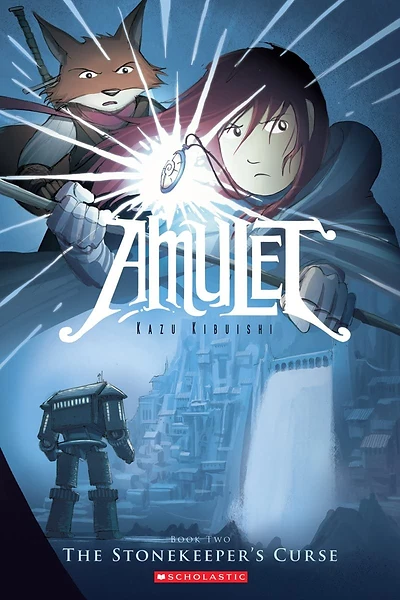
Amulet: The Stonekeeper's Curse
by Kazu Kibuishi
Pacing MaterialEmily and her brother Navin continue their quest through a mysterious world, where Emily must learn to control the power of the amulet — even as its curse threatens to consume her.
Big Idea
Great power comes with great responsibility — and the courage to resist what's easy in favor of what's right.
Discussion Questions
- 1.What is the curse of the Stonekeeper?
- 2.How does Emily struggle with the amulet's power?
- 3.What choices does Emily face between power and responsibility?
- 4.What would you do if you had power you couldn't fully control?
Classroom Activity
My Amulet
Design your own magical amulet. Draw it, describe its power, and write one sentence about the responsibility that comes with using it.
Lesson Plan
Learning Goals
- Explain how Emily’s struggle to control the amulet connects to the theme of using power responsibly.
- Use details from the story’s dialogue and illustrations to identify a difficult choice Emily faces.
- Design an original magical amulet and describe its power and limitations.
- Write a sentence explaining the responsibility that comes with using the invented amulet.
Activity Steps
- 1.Discuss a previously read scene in which Emily faces pressure from the amulet or must decide how to use its power. Ask: What does Emily want to accomplish? What could go wrong? Have students point to dialogue or visual details that support their answers.
- 2.Connect Emily’s choices to the big idea: having power means considering how its use affects others. Brainstorm powers that could help someone but also cause harm if used carelessly.
- 3.Invite students to design their own magical amulet. Have them draw its shape, colors, and symbols, adding visual clues that suggest what it can do.
- 4.Have students name their amulet and write a brief description of its power, including one limit or risk. Encourage powers that require thoughtful choices rather than solving every problem automatically.
- 5.Ask students to write one responsibility sentence using the frame: “When I use my amulet to ___, I must ___ because ___.” Students needing support may dictate their sentence; older students can add a short scenario showing a tempting misuse and a responsible alternative.
- 6.In pairs, have students share their designs and explain how their responsibility rule connects to Emily’s struggle. Close by asking: How can choosing what is right require more courage than choosing what is easy?
Standards Connections
- ELA: CCSS RL.3.3–RL.7.3 — Analyze characters, their choices, and how those choices influence events; select the grade-specific standard.
- ELA: CCSS RL.3.7–RL.7.7 — Examine how visual presentation contributes to meaning; adapt the discussion to the grade-specific standard.
- ELA: CCSS W.3.2–W.7.2 — Write explanatory text describing an invented amulet’s power and the responsibility associated with its use.
- ELA: CCSS SL.3.1–SL.7.1 — Participate in collaborative discussions, building on others’ ideas and supporting interpretations with story details.
- SEL: Responsible decision-making — Consider consequences, recognize potential harm, and choose ethical ways to use power.
Pace-Write-Read Study with Pace-Write It!
Focus question: How does Kazu Kibuishi speed up and slow down the action in Amulet: The Stonekeeper's Curse to build courage, danger, and suspense? In Amulet: The Stonekeeper's Curse by Kazu Kibuishi, Emily and Navin face new threats as Emily struggles with the amulet's power and curse. The graphic novel uses pacing through fast action panels, tense pauses, visual page turns, and dialogue that slows key moments so readers can feel both resilience and courage growing under pressure.
| Element | How to notice or teach it in the novel |
|---|---|
| Pace | Read: Notice how the story shifts between quick chase or battle scenes and slower moments when Emily thinks about the amulet's power or speaks with Navin. Kibuishi controls speed through panel size, action beats, and pauses to show both danger and determination. Classroom Activity: Write two short versions of a scene in which Emily reaches for the amulet—one version told fast in 4 short sentences and one version told slowly with 4 detailed sentences. |
| Plot | Read: Track how each new problem pushes Emily and Navin deeper into the quest, especially when the amulet's curse creates inner conflict along with outer danger. The plot moves forward through discoveries, attacks, and choices that test resilience. Classroom Activity: Create a 5-step plot ladder for a new adventure scene, showing how one problem leads Emily to make a brave choice. |
| Prosody | Read: Listen to how dialogue and sound effects would sound aloud in tense scenes, especially when voices sharpen during danger and soften during worry or care. Even in a graphic novel, sentence length and sound help set the reading rhythm. Classroom Activity: Choose a tense moment and rewrite the dialogue so a read-aloud performer would know where to speed up, whisper, or pause. |
| Word pause | Read: Notice the single powerful words, broken phrases, and brief speech bubbles that make readers stop, especially when Emily senses the amulet or when danger suddenly appears. These word pauses create suspense and emotional weight. Classroom Activity: Write a 6-line mini-scene using at least three one-word lines to build suspense before Emily makes a decision. |
| Concept | Read: Pay attention to the big idea that courage is not the absence of fear but acting while fear and temptation are present. Emily's struggle with the amulet shows resilience as both a physical and emotional challenge. Classroom Activity: Write a paragraph explaining how a magical object can help and harm a hero, using Emily as your example and then inventing your own character with a similar problem. |
| Voice & World View | Read: Notice how the story's voice blends wonder, danger, and urgency, creating a world where young characters must grow quickly. The worldview suggests that power brings responsibility and that courage requires self-control. Classroom Activity: Write 5-6 sentences from the point of view of someone in Emily's world who believes the amulet is either a gift or a curse. |
| Setting & Place | Read: Study how the mysterious world feels both magical and threatening, with strange locations that shape the mood of each scene. Kibuishi uses setting to affect pacing: cramped or dark places feel tense, while wide spaces can prepare readers for the next threat. Classroom Activity: Describe a new setting Emily and Navin enter, using 5 sensory details that make the place feel exciting but dangerous. |
| Point of View | Read: Notice how readers mainly experience events close to Emily and Navin, which helps us feel surprise and uncertainty with them. This point of view increases suspense because we often discover threats when they do. Classroom Activity: Rewrite a scary moment from the point of view of Navin watching Emily struggle with the amulet. |
| Original Characters | Read: Pay attention to how Emily stands out as brave but vulnerable, Navin as loyal and practical, and the supporting characters as unusual figures in a strange world. Their different reactions to danger help vary the pacing and emotional tone. Classroom Activity: Invent an original ally for Emily and Navin and write a character card with strengths, fears, and one secret that could speed up or slow down the plot. |
| Dialogue | Read: Notice how dialogue in this book is often brief and direct, especially during danger, which keeps scenes moving quickly. At emotional moments, the dialogue can slow the pace and reveal Emily's struggle between courage and the curse. Classroom Activity: Write 8 lines of dialogue between Emily and Navin arguing about whether to use the amulet again. |
| Details | Read: Watch for the carefully chosen details that matter most—facial expressions, mechanical or magical features, and small signs of danger. Kibuishi does not overload every moment with words; instead, precise details guide the reader's attention. Classroom Activity: Write a short action paragraph about Emily entering a dangerous room, using exactly 5 important details and no extra explanation. |
| Descriptions | Read: Notice how descriptions in a graphic novel come from both words and images, especially when the mood shifts from wonder to fear. The description of the world around Emily deepens the sense that courage is needed at every turn. Classroom Activity: Write 6 descriptive sentences for a graphic-novel panel sequence showing the amulet glowing in a dark place. |
| Strong First Lines | Read: Think about how opening lines or opening moments in scenes quickly pull readers into danger, mystery, or emotion. Kibuishi begins scenes in ways that make readers want to know what Emily will do next. Classroom Activity: Write three possible first lines for a new chapter in which Emily hears the amulet calling to her. |
| Immediacy & Engagement | Read: Notice how the book makes events feel immediate through close-up expressions, urgent dialogue, and action that seems to happen right now. Readers stay engaged because Emily's choices have consequences right away. Classroom Activity: Write a present-tense scene of 5-7 sentences in which Navin spots a threat and must warn Emily instantly. |
| Story Scenes & Summaries & Unique Structures | Read: Pay attention to how some parts unfold as full dramatic scenes while other parts move more quickly through transitions. The graphic novel structure lets Kibuishi summarize time by moving between panels and scenes without long explanation. Classroom Activity: Write one full scene of 6 sentences and one 2-sentence summary that could come right after it to move the quest forward. |
| Flashback & Flash Forward & Cliffhangers | Read: Notice how memories, warnings, or hints about what may happen next can deepen Emily's conflict with the amulet. Cliffhangers at the end of scenes or pages make readers rush forward while worrying about the curse. Classroom Activity: Write a cliffhanger ending for a scene in which Emily begins to lose control of the amulet's power. |
| Tension & Suspense & Surprise | Read: Watch how tension grows when Emily must act before she fully understands the danger, and how suspense builds when the amulet may help or hurt her. Surprising turns keep the adventure alive and test the characters' resilience. Classroom Activity: Write a 7-sentence suspense scene that includes a false clue, a rising danger, and a surprise final sentence. |
| Page Turns and Chapter Breaks | Read: In a graphic novel, page turns matter because a reveal on the next page can shock the reader or speed up the action. Think about how Kibuishi uses page turns and scene breaks to hide information until the perfect moment. Classroom Activity: Plan a 4-panel page ending with a page-turn surprise involving Emily, Navin, and a new enemy. |
| Performance | Read: Notice how body language, facial expressions, and the way dialogue could be acted make scenes feel dramatic. Emily's determination, Navin's worry, and the menace of the amulet can all be performed through voice and gesture. Classroom Activity: Script a short dramatic reading of a confrontation scene, adding performance notes like [whisper], [shout], or [pause]. |
| Personality | Read: Pay attention to how Emily's courage, Navin's steadiness, and other characters' fears or motives shape the pace of scenes. Strong personalities affect whether a moment becomes calm, tense, or explosive. Classroom Activity: Write a first-person journal entry from Emily that shows bravery on the outside and fear on the inside. |
| Humor | Read: Notice any lighter moments that give readers a breath between intense scenes. Small bits of humor can slow the pressure for a moment and make the danger feel even stronger when it returns. Classroom Activity: Write a brief exchange in which Navin uses humor to calm Emily before a risky mission. |
| Pause | Read: Watch for moments when the action stops so a character can think, worry, or notice something important. These pauses are essential because they let readers feel the weight of Emily's choices about the amulet. Classroom Activity: Write a 5-sentence pause scene in which Emily hears the amulet's influence and must decide whether to listen. |
| Poetry and Poetic Devices | Read: Even though this is an adventure graphic novel, some moments feel poetic because of repeated images, strong contrasts of light and dark, and powerful symbolic language around the amulet. These poetic touches deepen the theme of courage under pressure. Classroom Activity: Write a 4-line free-verse poem comparing the amulet to something dangerous and something hopeful. |
| Repetition | Read: Notice repeated warnings, images, or choices connected to the amulet and Emily's responsibility. Repetition reminds readers of the danger and builds a pattern that strengthens suspense. Classroom Activity: Write a paragraph that repeats one phrase three times to show Emily fighting the curse. |
| Rhythm | Read: Pay attention to the rhythm created by short dialogue, quick panels, then longer pauses. The rhythm of the book mirrors a quest: move, stop, fear, choose, and move again. Classroom Activity: Write 6 sentences with this rhythm pattern: short, short, long, short, long, short. |
| Punctuation | Read: Notice how exclamation points, ellipses, dashes, and question marks affect the speed and emotion of conversations and danger scenes. In Emily's world, punctuation helps readers hear panic, hesitation, and urgency. Classroom Activity: Rewrite a plain 4-sentence action scene three times, changing the punctuation each time to create panic, suspense, and calm. |
| Questions | Read: The story keeps readers asking questions: Can Emily control the amulet? What will the curse cost her? How will Navin help? These unanswered questions pull the reader through the book. Classroom Activity: Write 5 reader questions that could appear during a chapter, then choose one and answer it in a new scene. |
| Compare-Contrast | Read: Compare Emily's brave choices with moments when the amulet's power threatens to control her, and contrast Navin's practical courage with Emily's magical burden. These contrasts sharpen the theme of resilience. Classroom Activity: Make a T-chart comparing courage with power, then write a paragraph explaining where Emily fits on both sides. |
| Objects | Read: Focus on the amulet as a powerful object that drives the pace, conflict, and theme, and notice how other tools or objects in the world can signal danger or hope. Important objects often carry emotional meaning as well as plot importance. Classroom Activity: Invent a new object for the story world and write 5 sentences explaining its powers, risks, and effect on Emily and Navin. |
| Threes | Read: Notice how groups of three can organize action, warnings, or character choices in a memorable way. Adventure stories often use threes to build momentum and expectation. Classroom Activity: Write a scene in which Emily faces three obstacles in a row, with each one harder than the last. |
| Whitespace & Negative Space | Read: In a graphic novel, empty space can create silence, isolation, or a beat before danger. Notice how moments with less visual crowding can make Emily seem alone with the amulet's pressure. Classroom Activity: Plan a 3-panel scene and explain where you would leave extra blank space to show fear or suspense. |
| Art & Graphics | Read: Study how Kibuishi's artwork controls pacing through panel size, facial close-ups, motion, shadows, and dramatic reveals. The art is not just decoration; it tells the story of resilience and courage alongside the words. Classroom Activity: Sketch or describe a 4-panel sequence showing Emily resisting the amulet, and label how each panel changes the pace. |
| Interactives & Gamification | Read: Think about how the quest structure of Emily and Navin's adventure can feel like levels, choices, obstacles, and power-ups, especially with the amulet's risky abilities. This structure keeps readers engaged because each challenge raises the stakes. Classroom Activity: Design a choice-based story map where students choose how Emily responds to the amulet, and write two different outcomes based on those choices. |
Pace-Write It!
20-Minute Classroom Flow\nRead (5 min): Read a high-tension excerpt from Amulet: The Stonekeeper's Curse in which Emily faces danger and the amulet's power affects her choices. Ask students to pay attention to where the story feels fast and where it slows down.\nNotice (5 min): Students turn and talk: What did Kazu Kibuishi do with panels, dialogue, pauses, and page-turn suspense to control pacing? Chart student noticings under Fast, Slow, and Surprise.\nWrite (7 min): Students write a new mini-scene in the style of the book. Writing frame: 'Emily saw ________. Navin warned, "________." The amulet ________. For one second, everything slowed. Emily thought, "________." Then ________. At the very last moment, ________.' Challenge students to include 1 short line of dialogue, 1 pause, and 1 cliffhanger ending.\nShare (3 min): Partners read their scenes aloud and identify where the pacing speeds up, slows down, and leaves the reader in suspense. Invite 1-2 volunteers to share a strong cliffhanger.\nExit ticket: In one sentence, explain one way Kazu Kibuishi uses pacing in Amulet: The Stonekeeper's Curse, and name one pacing move you used in your own writing.