 K-3
K-3P STEAD
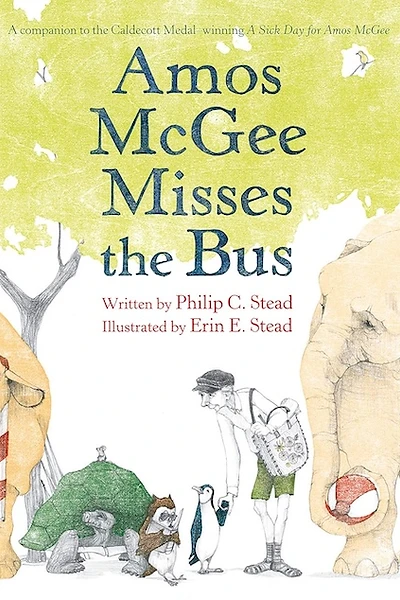
Amos McGee Misses the Bus
by Philip C. Stead
Pacing MaterialWhen Amos McGee misses the bus, his loyal animal friends come to make sure he's not left behind — a companion to the Caldecott Medal-winning A Sick Day for Amos McGee.
Big Idea
True friends show up for each other, even when things don't go as planned.
Discussion Questions
- 1.How do Amos's friends show they care about him?
- 2.What do you do when a friend is having a bad day?
- 3.Why is it important to be patient with others?
Classroom Activity
Friendship Bus Schedule
Students create a 'friendship bus' card for a classmate, describing how they can show up for them.
Lesson Plan
Learning Goals
- Understand friendship and empathy
- Practice writing for a real audience
- Express care through words
Activity Steps
- 1.Read the story and list how each animal helps Amos
- 2.Discuss what it means to 'show up' for a friend
- 3.Create a friendship bus card for a classmate
- 4.Deliver the cards
Standards Connections
- ELA: RL.K.1 — Ask and answer questions about key details
- ELA: RL.K.2 — Retell stories, including key details
- ELA: RL.K.3 — Describe characters, setting, and events
- ELA: RL.3.6 — Acknowledge differences in characters' points of view
- ELA: SL.K.1 — Participate in collaborative conversations about the text
- ELA: W.K.3 — Write narratives recounting events with descriptive details
- SEL: Relationship Skills
- SEL: Social Awareness
- Art: VA:Re7 — Perceive and analyze artistic work
Pace-Write-Read Study with Pace-Write It!
Focus question: How does an author slow down and speed up a story to show friendship and patience? In Amos McGee Misses the Bus by Philip C. Stead, the story follows Amos after he misses the bus and his animal friends work together to help him. Stead uses gentle pacing, page-by-page action, and quiet moments of waiting and noticing to make the friendship feel warm, steady, and meaningful.
| Element | How to notice or teach it in the novel |
|---|---|
| Pace | Read: Notice how the story moves at a calm, gentle pace as Amos misses the bus and the animals help him, matching the theme of friendship and patience. Classroom Activity: Write 3-4 sentences about a time a friend helped someone, using one sentence to slow the action down and one sentence to speed it up. |
| Plot | Read: Follow the clear sequence of events: Amos plans to ride, misses the bus, and his loyal animal friends come so he is not left behind. Classroom Activity: Make a beginning-middle-end map for Amos McGee Misses the Bus, then write a new short ending where Amos thanks each animal. |
| Prosody | Read: Listen to the smooth, comforting sound of the sentences and how they fit the book’s tender mood. Classroom Activity: Read one page aloud with expression, then write 2 sentences that sound calm and caring, as if they belong in Amos McGee Misses the Bus. |
| Word pause | Read: Notice where a word or short phrase makes you naturally pause, helping the waiting and wondering feel stronger as Amos is delayed. Classroom Activity: Write 2 sentences about waiting at a bus stop and add a pause with a dash or extra line break for effect. |
| Concept | Read: Think about the big idea that real friends show patience and stay with you when plans go wrong, just like Amos’s animal friends do. Classroom Activity: Write one sentence naming the lesson of the story and one sentence telling how an animal shows that lesson. |
| Voice & World View | Read: Notice the gentle, kind voice of the story and its world view that small acts of care matter. Classroom Activity: Write 3 sentences in a warm, reassuring voice about helping someone who is running late, using Amos or one of the animals. |
| Setting & Place | Read: Pay attention to the bus stop, streets, and places Amos travels through, and how these ordinary places become important because of friendship. Classroom Activity: Draw and label a setting from the story, then write 2 sentences explaining how that place affects what happens. |
| Point of View | Read: Notice that the story is told from an outside narrator who lets us watch Amos and the animals with some distance and calm. Classroom Activity: Rewrite one moment from the point of view of an animal friend watching Amos miss the bus. |
| Original Characters | Read: Study how Amos McGee and his animal friends feel familiar yet memorable because each one helps in a loyal, distinctive way. Classroom Activity: Invent one new animal friend for Amos and write 3 sentences describing how that character would help him. |
| Dialogue | Read: Notice how any spoken words are used carefully so actions and feelings stay at the center of the story. Classroom Activity: Write a short dialogue of 4 lines between Amos and one animal friend after the bus is missed. |
| Details | Read: Look for small details about Amos, the bus, and the animals that make the story feel real and patient rather than rushed. Classroom Activity: Write 3 detail sentences describing what Amos sees, hears, or feels while waiting. |
| Descriptions | Read: Notice the soft descriptions that help readers picture Amos’s journey and the animals’ caring actions. Classroom Activity: Write 2 descriptive sentences about the moment the animal friends arrive, using color, movement, or sound words. |
| Strong First Lines | Read: Think about how the opening begins the story in a way that prepares readers for a small problem and a gentle adventure. Classroom Activity: Write a new first line for a companion story called Amos McGee Waits in the Rain. |
| Immediacy & Engagement | Read: Notice how readers stay engaged by wanting to know how Amos will get where he needs to go once he misses the bus. Classroom Activity: Write 2-3 sentences that make a reader want to keep reading about a character who is suddenly left behind. |
| Story Scenes & Summaries & Unique Structures | Read: Notice how some parts feel like close-up scenes and other parts move more quickly through time, creating a balanced structure. Classroom Activity: Write one scene in detail about Amos waiting, then one summary sentence that jumps ahead to the animals helping him. |
| Flashback & Flash Forward & Cliffhangers | Read: Think about how this book stays mostly in the present instead of using flashbacks or cliffhangers, which helps keep the pacing gentle and steady. Classroom Activity: Add one flashback sentence about a time Amos helped the animals, then write one present-time sentence returning to the bus stop. |
| Tension & Suspense & Surprise | Read: Notice the quiet tension when Amos misses the bus and the sweet surprise that his animal friends come to help. Classroom Activity: Write 3 sentences that build mild suspense about waiting for help, ending with a friendly surprise. |
| Page Turns and Chapter Breaks | Read: Pay attention to how page turns can hold a small moment of wondering about what Amos or the animals will do next; as a picture book, it uses page turns instead of chapter breaks. Classroom Activity: Plan a 4-page mini-book and write what should happen before and after one exciting page turn. |
| Performance | Read: Notice how the story invites a soft, expressive read-aloud with pauses, warm tone, and gentle emphasis on caring actions. Classroom Activity: Practice performing one page aloud, then mark your script with 3 pause or expression cues. |
| Personality | Read: Look at how Amos’s calm personality and the loyal personalities of the animals shape the slow, thoughtful pacing. Classroom Activity: Choose Amos or an animal friend and write 3 sentences showing that character’s personality through actions, not traits alone. |
| Humor | Read: Notice the quiet humor that can come from animal friends behaving so helpfully and seriously in a human problem like missing a bus. Classroom Activity: Write a funny-but-gentle sentence about one animal trying to solve Amos’s bus problem. |
| Pause | Read: Watch for moments where the story seems to take a breath, letting readers feel waiting, noticing, and patience. Classroom Activity: Write a 3-sentence moment about waiting in which the middle sentence is very short to create a pause. |
| Poetry and Poetic Devices | Read: Listen for repeated sounds, soft imagery, and simple, lyrical phrasing that make the story feel almost poetic. Classroom Activity: Write 2 lines about Amos and his friends using alliteration, such as repeating the same beginning sound. |
| Repetition | Read: Notice any repeated actions, patterns, or ideas of helping and waiting that strengthen the theme of dependable friendship. Classroom Activity: Write a pattern book sentence starter such as “Amos waited…” or “His friends came…” and repeat it 3 times with different endings. |
| Rhythm | Read: Feel the steady rhythm of the sentences, which matches the patient movement of the story. Classroom Activity: Clap the rhythm of one sentence from the story, then write your own sentence with a similarly smooth beat. |
| Punctuation | Read: Notice how punctuation helps the story stay calm, clear, and readable, instead of fast and frantic. Classroom Activity: Write 3 sentences about Amos missing the bus, using a period, a comma, and an exclamation mark correctly. |
| Questions | Read: Ask yourself questions while reading, such as why the animals help Amos so quickly and what that shows about friendship. Classroom Activity: Write 2 reader questions about the story, then answer one using evidence from the animals’ actions. |
| Compare-Contrast | Read: Compare the hurried problem of missing the bus with the patient way Amos and his friends respond to it. Classroom Activity: Make a T-chart comparing Amos’s problem and the animals’ solution, then write 2 compare-contrast sentences. |
| Objects | Read: Notice how objects like the bus and anything Amos carries can become important story tools that move the plot and symbolize routine or change. Classroom Activity: Choose one object from the story and write 3 sentences about why it matters to Amos. |
| Threes | Read: Look for places where actions, details, or examples could be grouped in threes to make the story sound satisfying and complete. Classroom Activity: Write a sentence listing 3 ways the animals show patience while helping Amos. |
| Whitespace & Negative Space | Read: Notice how open space on the pages can slow readers down and make the quiet mood and waiting feel bigger. Classroom Activity: Create a picture-book page with one short sentence and lots of blank space to show a long wait. |
| Art & Graphics | Read: Study how the illustrations support pacing by showing facial expressions, distance, movement, and calm pauses for Amos and his animal friends. Classroom Activity: Sketch one scene of Amos with the animals and write a caption explaining how the picture slows down or speeds up the story. |
| Interactives & Gamification | Read: Think about how readers can interact by predicting what the animals will do next after Amos misses the bus. Classroom Activity: Make a 3-step classroom game called “Help Amos!” where students draw a problem card, a helper card, and a solution card, then write 2 sentences telling the new story. |
Pace-Write It!
20-Minute Classroom Flow Read (5 min): Read aloud Amos McGee Misses the Bus by Philip C. Stead. Stop briefly at the moment Amos misses the bus and ask students to notice how the story does not become wild or rushed. Notice (5 min): Discuss: How do the words, page turns, and pictures help us feel waiting, patience, and friendship? Chart student ideas under these headings: slows down, speeds up, shows caring. Write (7 min): Students write a short companion scene about Amos or a new character who has a small problem and is helped by a patient friend. Writing frame: “When ____ happened, ____ felt ____. First, ____. Then, ____. At last, ____. This showed friendship because ____.” Encourage students to include one slow, detailed sentence and one quicker sentence. Share (3 min): Partners read their writing aloud and point to the sentence that slows the pace and the sentence that speeds it up. Exit ticket: Write one sentence answering: How did Philip C. Stead use pacing in Amos McGee Misses the Bus to show friendship and patience?