 PreK-2
P ALL WELCOME
All Are Welcome
by Alexandra Penfold
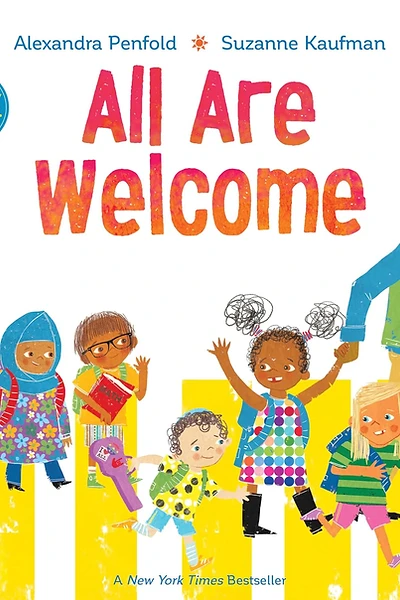
Pacing MaterialThis vibrant picture book follows a diverse group of children as they go through a school day. It highlights the beauty of different cultures, traditions, and backgrounds, showing how a classroom thrives when everyone is included.
Big Idea
Every child brings unique gifts to the classroom, and our diversity makes our school community stronger.
Discussion Questions
- 1.What are some ways the children in the story are different?
- 2.How does the school show they are welcome?
- 3.What can you do to make a new friend feel welcome?
- 4.Why is it important for us to learn about each other's traditions?
- 5.How do you feel when you are included in a game or activity?
Classroom Activity
Our Diverse Classroom Quilt
Students will design a paper quilt square that represents their own unique identity and cultural heritage to display on the wall.
Lesson Plan
Learning Goals
- Identify personal unique characteristics
- Recognize the value of diversity
- Practice fine motor skills through drawing and collage
Activity Steps
- 1.Discuss how each person in our class is unique.
- 2.Distribute square paper templates to every student.
- 3.Have students draw or glue pictures that represent their family or heritage.
- 4.Help students write one word on their square that describes them.
- 5.Assemble all squares into a class quilt display.
Standards Connections
- CCSS.ELA-LITERACY.SL.K.1
- CASEL Self-Awareness
- National Core Arts Standard VA:Cr1.1.PK
Pace-Write-Read Study with Pace-Write It!
Focus question: How does Alexandra Penfold make a school day in All Are Welcome feel calm, joyful, and full of belonging? In All Are Welcome by Alexandra Penfold, readers follow a diverse group of children through the different parts of a school day. The pacing moves smoothly from one shared moment to the next, using repeated language, page turns, and warm illustrations to help readers feel that every child has a place in the classroom.
| Element | How to notice or teach it in the novel |
|---|---|
| Pace | Read: Notice how the story moves step by step through the school day, from arrival to learning, eating, playing, and going home. The steady pace helps the message of acceptance and belonging feel safe and welcoming for every child. Classroom Activity: Write 4 short sentences that show one day at school moving in order from morning to afternoon, using the idea that everyone belongs. |
| Plot | Read: The plot is simple and follows children through ordinary school events, but each event builds the big idea that the classroom is a place where all are welcome. There is no single problem to solve; instead, the story shows community growing across the day. Classroom Activity: Draw and label 3 parts of a school day plot: beginning, middle, and end, and write one sentence for each part showing inclusion. |
| Prosody | Read: Listen to how the repeated lines and smooth phrasing make the book sound musical when read aloud. The rhythm helps the class feel united, almost like the whole book is speaking together. Classroom Activity: Read the repeating welcome line with a partner in a warm, happy voice, then write your own class chant beginning with 'All are welcome...'. |
| Word pause | Read: Notice where a reader naturally pauses at commas and line breaks to take in the different families, foods, clothes, and traditions in the school. These small pauses give readers time to notice each child's place in the community. Classroom Activity: Choose one page and mark 3 places where you would pause while reading aloud, then write one sentence about why that pause matters. |
| Concept | Read: The big concept is that a school becomes stronger and kinder when children from many cultures, backgrounds, and traditions learn together. The book shows acceptance not by explaining it in a long way, but by showing it in everyday moments. Classroom Activity: Finish this sentence in writing: 'Our classroom is better when ________.' |
| Voice & World View | Read: The voice of the book is warm, inclusive, and hopeful, and its world view is that every child deserves safety, respect, and belonging. The words and pictures together celebrate difference as something beautiful in a shared classroom. Classroom Activity: Write 2 sentences in a kind, welcoming voice to a new student entering your classroom. |
| Setting & Place | Read: The main setting is a busy school filled with classrooms, lunch spaces, hallways, playgrounds, and family connections. This school feels like a real place where many identities can be seen and honored. Classroom Activity: Write a sentence describing one place in your school where people can feel welcome, and add 3 describing words. |
| Point of View | Read: The book uses an outside narrator who watches the whole class and shows many children instead of focusing on just one. This point of view helps readers understand that belonging is for everyone, not only one character. Classroom Activity: Write one sentence about recess from the view of 'we' instead of 'I'. |
| Original Characters | Read: The children are not introduced with long biographies, but they feel original because the illustrations show many identities, clothing styles, family structures, skin tones, and cultural traditions. Together, they create a classroom community where each child matters. Classroom Activity: Invent a student character who would fit in this book and write 3 details about what makes that child special. |
| Dialogue | Read: This book has very little traditional dialogue, which keeps the pacing flowing quickly across the school day. Instead of conversations, the repeated welcoming message acts like the classroom speaking together. Classroom Activity: Write 2 lines of dialogue between two classmates welcoming a new student. |
| Details | Read: Look closely at the details in the illustrations, such as lunches, clothing, decorations, mobility supports, and family members, that show many ways of living and learning. These details deepen the theme of belonging without slowing the story too much. Classroom Activity: Choose one illustration detail and write a sentence explaining what it teaches about inclusion. |
| Descriptions | Read: The descriptions are simple but vivid, helping readers picture a colorful, lively school day. The language does not overload the page, so the pacing stays light and accessible for young readers. Classroom Activity: Write a 2-sentence description of your classroom using color words and feeling words. |
| Strong First Lines | Read: The opening quickly welcomes readers into the school community and establishes the book's message right away. This strong beginning sets a reassuring tone and prepares readers for a day where every child is seen. Classroom Activity: Write your own strong first line for a class book about belonging. |
| Immediacy & Engagement | Read: The book feels immediate because readers can recognize familiar school routines like entering the classroom, learning together, eating lunch, and playing outside. This connection helps children engage quickly and imagine themselves in the story. Classroom Activity: Write one sentence that begins 'Right now in our classroom...' |
| Story Scenes & Summaries & Unique Structures | Read: The story uses short scenes from across the day instead of one long event, and each scene works like a snapshot of belonging. This structure helps the book cover many children and many moments in a short space. Classroom Activity: Make a 4-box timeline of the school day and write one summary sentence under each box. |
| Flashback & Flash Forward & Cliffhangers | Read: This book does not use flashbacks, flash forwards, or cliffhangers because its calm pacing matches the reassuring theme of acceptance. The story stays in the present school day to help readers feel steady and secure. Classroom Activity: Write one sentence about what happened before school and one sentence about what might happen after school for a child in this class. |
| Tension & Suspense & Surprise | Read: There is very little tension because the book wants readers to feel comfort and connection, not worry. The small surprise comes from noticing how many kinds of children, families, and traditions are joyfully included. Classroom Activity: Write about a happy surprise you might notice in a welcoming classroom. |
| Page Turns and Chapter Breaks | Read: In this picture book, page turns help move readers from one school moment to the next and reveal new examples of community. There are no chapter breaks, so the day feels connected and continuous. Classroom Activity: Plan 2 picture-book pages for your own school story and write what a reader will discover after each page turn. |
| Performance | Read: The repeated lines invite a group read-aloud performance, where the class can join in on the welcoming refrain together. This shared reading mirrors the book's message that everyone belongs. Classroom Activity: Practice reading the refrain with expression, then write one line your whole class could perform together. |
| Personality | Read: The book's personality is gentle, celebratory, and inclusive. Even without one main character, the classroom itself seems to have a kind personality built from all the children learning together. Classroom Activity: Write 3 words that describe the personality of the classroom in the book, then use one in a sentence. |
| Humor | Read: Humor is quiet and gentle here, coming more from joyful classroom energy and recognizable school moments than from jokes. The warm tone keeps the pacing easy and inviting. Classroom Activity: Write a funny but kind sentence about something that could happen during a school day. |
| Pause | Read: Readers may pause to look carefully at the illustrations and notice how the book includes many cultures, abilities, and family structures. These pauses deepen understanding of the theme of belonging. Classroom Activity: Stop on one page, look silently for 30 seconds, and then write one new thing you noticed. |
| Poetry and Poetic Devices | Read: The book uses poetic language through repetition, rhythm, and a refrain that sounds almost like a song. These poetic devices help the message feel memorable and comforting. Classroom Activity: Write a 2-line poem about your classroom using the repeated words 'You are welcome' or 'We belong'. |
| Repetition | Read: Repetition is one of the strongest pacing tools in All Are Welcome, especially in the recurring line that reminds readers of the book's central idea. Each repetition strengthens the feeling of safety and unity. Classroom Activity: Write 3 sentences that all begin with the same welcoming phrase. |
| Rhythm | Read: The sentences have a gentle rhythm that supports read-aloud fluency and helps the school day unfold smoothly. The rhythm makes ordinary routines feel connected and important. Classroom Activity: Clap the beat of one repeated line, then write your own sentence with a similar rhythm. |
| Punctuation | Read: Notice how punctuation helps the read-aloud sound calm and clear, with stops and pauses that let readers absorb each welcoming moment. The punctuation supports smooth pacing instead of fast excitement. Classroom Activity: Write 2 welcoming sentences and use periods or commas to show how they should sound. |
| Questions | Read: The book itself is more declarative than questioning, which makes its message sound confident and reassuring: all children belong. Readers and teachers can add questions to help notice who is included and how. Classroom Activity: Write 2 questions you could ask a classmate after reading this book about belonging. |
| Compare-Contrast | Read: The book invites compare-contrast thinking by showing children with different foods, clothes, languages, homes, and traditions sharing one classroom. Their differences are visible, but their belonging is shared. Classroom Activity: Write one sentence about how two students in the book may be different and one sentence about how they are the same. |
| Objects | Read: Objects in the illustrations, like backpacks, lunchboxes, art supplies, books, head coverings, and mobility tools, help tell the story of identity and daily school life. These objects quietly support the message that every child's life matters in the classroom. Classroom Activity: Choose one object from school and write how it could help someone feel included. |
| Threes | Read: You can notice groups of three details on many pages, such as three actions, three kinds of classroom moments, or three visual examples of diversity. Grouping details in threes can help young writers organize ideas clearly. Classroom Activity: Write 3 ways to welcome someone to school. |
| Whitespace & Negative Space | Read: The page design gives space around the words and images so young readers can focus on each moment without feeling crowded. This openness supports the calm pacing and the inviting tone of the book. Classroom Activity: Make a page plan for one sentence and one picture, leaving blank space to help the important idea stand out. |
| Art & Graphics | Read: The bright illustrations are essential to the pacing because they carry much of the meaning while the text stays simple. The art shows the diverse children, families, and school spaces that make the message of belonging visible. Classroom Activity: Draw a classroom scene with at least 4 details that show everyone is welcome, then write one matching sentence. |
| Interactives & Gamification | Read: This book is not a game, but readers can interact by spotting examples of inclusion, community, and cultural variety on each page. Turning the reading into a noticing game helps students engage with the theme and pacing. Classroom Activity: Create a 'welcome hunt' list with 4 things to find in the illustrations, then write one sentence about your favorite find. |
Pace-Write It!
20-Minute Classroom Flow Read (5 min): Read All Are Welcome aloud, inviting students to join in on the repeated welcoming line. Pause briefly on key pages to notice children, families, clothing, lunches, classroom spaces, and shared routines. Notice (5 min): Ask: 'How does the book move through the day?' and 'How do the words and pictures show that everyone belongs?' Chart student ideas under two headings: 'School Day Order' and 'Ways We See Welcome.' Write (7 min): Students write their own short school-day page inspired by the book. Writing frame: 'In our classroom, we ________. We see ________. All are welcome here.' Encourage students to add one specific detail such as a friend, object, place, or routine that helps people feel they belong. Share (3 min): Students read their sentence or page to a partner or the class. After each share, listeners respond with: 'You showed welcome by ________.' Exit ticket: Complete this sentence on a sticky note: 'One way to help everyone belong at school is ________.'