 PreK-2
P ALL WELCOME
All Are Neighbors
by Alexandra Penfold
Pacing MaterialFocusing on the larger community, this book celebrates the joy of being part of a neighborhood where people look out for one another. It encourages children to see themselves as active, helpful members of their local area.
Big Idea
We build strong communities by helping our neighbors and taking care of the places we share.
Discussion Questions
- 1.What does it mean to be a good neighbor?
- 2.How do the characters in the book help each other?
- 3.What are some things you like about where you live?
- 4.How can you help someone who lives near you?
- 5.Why is it important to keep our neighborhood clean and friendly?
Classroom Activity
Our Neighborhood Map
Students will collaborate to draw a large mural of a neighborhood that includes all the people and places that make their community special.
Lesson Plan
Learning Goals
- Understand the concept of community
- Recognize roles of people in a neighborhood
- Collaborate on a group project
Activity Steps
- 1.Brainstorm important places in a community (park, school, grocery store).
- 2.Lay out a large piece of butcher paper on the floor.
- 3.Assign small groups to draw different buildings or homes.
- 4.Have students add themselves or their families into the scene.
- 5.Present the finished map to the class.
Standards Connections
- CCSS.ELA-LITERACY.W.K.8
- CASEL Relationship Skills
- National Core Arts Standard VA:Cr3.1.K
Pace-Write-Read Study with Pace-Write It!
Focus question: How does a story about a neighborhood move in a calm, joyful way while still keeping readers interested? In All Are Neighbors by Alexandra Penfold, the neighborhood is shown as a welcoming place where people help, greet, and care for one another. The pacing moves through small community moments, repeated welcoming ideas, and page-by-page scenes that let young readers pause, notice, and feel how belonging grows.
| Element | How to notice or teach it in the novel |
|---|---|
| Pace | Read: Notice how All Are Neighbors moves at a gentle, steady pace as the book travels through everyday neighborhood moments of helping, greeting, and gathering. The calm pacing matches the theme that belonging is built little by little in a caring community. Classroom Activity: Write 3 short sentences that show one neighborhood action at a time, such as waving, helping, and welcoming. |
| Plot | Read: Notice that the plot is not about one big problem but about many small actions that show neighbors caring for each other. Alexandra Penfold builds a community story where the neighborhood itself feels important. Classroom Activity: Draw and label a beginning, middle, and end for a neighborhood story about a child who helps others feel included. |
| Prosody | Read: Listen to how the lines can be read smoothly and warmly, with a friendly voice that fits the message of acceptance and belonging. The language invites expressive reading that sounds kind and open. Classroom Activity: Echo-read one welcoming line with a partner, then write your own line that should be read in a warm, inviting voice. |
| Word pause | Read: Notice where you naturally stop for a moment to think about a kind action, a new person, or a community scene. These small pauses help readers feel the meaning of neighborliness in All Are Neighbors. Classroom Activity: Write one sentence about a helpful neighbor and circle the word where a reader should pause for emphasis. |
| Concept | Read: The big concept in this book is that everyone belongs and everyone can help a community grow stronger. The neighborhood becomes a place where acceptance is shown through actions, not just words. Classroom Activity: Finish this sentence in writing: 'A neighbor is someone who ________.' Then add one example from your own community. |
| Voice & World View | Read: Notice the welcoming, inclusive voice that sees the neighborhood as a shared space for many different people. Alexandra Penfold presents a world view where kindness, care, and participation matter for everyone. Classroom Activity: Write 2 sentences in a kind community voice telling a new neighbor they belong here. |
| Setting & Place | Read: Notice how the neighborhood setting is central to the story, with homes, streets, and shared spaces helping create the feeling of community. Place matters because belonging happens where people see and support one another. Classroom Activity: Make a quick sketch of your neighborhood or classroom community and write 3 labels showing where people can help or welcome others. |
| Point of View | Read: Notice that the story presents the neighborhood in a broad, community-centered way, helping readers think about many people instead of only one character. This point of view supports the message that everyone has a place. Classroom Activity: Write the same helpful moment from two points of view: 'I helped' and 'We helped.' |
| Original Characters | Read: Notice that the people in All Are Neighbors represent a neighborhood community rather than one single star character. The originality comes from showing many neighbors as important members of the same caring world. Classroom Activity: Invent one new neighbor character and write 2 sentences telling how that person helps others belong. |
| Dialogue | Read: Listen for how spoken words in a book like All Are Neighbors would sound welcoming, helpful, and community-minded. Even brief dialogue can show acceptance right away. Classroom Activity: Write 2 lines of dialogue between two neighbors, with one neighbor making the other feel included. |
| Details | Read: Notice the small details of community life—greetings, shared spaces, helping hands, and friendly actions—that build the book’s meaning. These details show belonging in ways young readers can recognize. Classroom Activity: Make a list of 4 tiny details that show a neighborhood is caring, then use 2 of them in a sentence. |
| Descriptions | Read: Notice how descriptions help readers picture a lively, caring neighborhood filled with people who look out for each other. The descriptive style supports the warm mood of the book. Classroom Activity: Write a describing sentence about a neighborhood scene using at least 2 sensory words, such as what you see or hear. |
| Strong First Lines | Read: Notice how the opening of a community-themed picture book needs to invite readers in quickly and make them feel part of the neighborhood right away. In All Are Neighbors, the beginning sets a welcoming tone from the start. Classroom Activity: Write a first line for a new picture book about belonging that makes readers want to enter the neighborhood. |
| Immediacy & Engagement | Read: Notice how the book keeps children engaged by showing familiar acts like noticing others, helping, and joining in. Readers stay connected because the neighborhood scenes feel close to their own lives. Classroom Activity: Write 2 short sentences that begin with 'Right now' to make a neighborhood moment feel immediate. |
| Story Scenes & Summaries & Unique Structures | Read: Notice how the book can move between individual scenes of neighborhood life and broader summary ideas about community. This structure helps the story feel both specific and universal. Classroom Activity: Write one scene sentence about a child helping at one moment and one summary sentence about what neighbors do every day. |
| Flashback & Flash Forward & Cliffhangers | Read: Notice that All Are Neighbors does not depend on dramatic flashbacks or cliffhangers; instead, it stays rooted in the present feeling of community. This helps young readers focus on steady belonging rather than suspense. Classroom Activity: Write one sentence that starts with 'Yesterday' and one that starts with 'Tomorrow' to show how kindness can continue over time. |
| Tension & Suspense & Surprise | Read: Notice that the book creates interest without strong danger or fear; the emotional movement comes from wondering how people will connect and care for one another. Any surprise comes from joyful acts of welcome. Classroom Activity: Write a short neighborhood moment where someone feels unsure at first, then is surprised by kindness. |
| Page Turns and Chapter Breaks | Read: Notice how page turns in a picture book like All Are Neighbors can reveal a new person, place, or act of kindness. Because there are no chapters, each page turn helps pace the reading experience. Classroom Activity: Plan a 4-page mini-book and write what happens on each page turn in a neighborhood story. |
| Performance | Read: Notice how this book is strong for read-aloud performance because the message is warm, the scenes are clear, and the pacing gives time for expression. Readers can use gesture and tone to show welcome and care. Classroom Activity: Practice reading one line with a smile, open arms, or a gentle voice, then write a stage direction like '[wave hello]' next to your own sentence. |
| Personality | Read: Notice how the neighborhood in All Are Neighbors has a caring personality created through repeated acts of kindness and inclusion. The community itself feels friendly and active. Classroom Activity: Write 3 describing words for the neighborhood’s personality, then use one in a sentence about a place where people belong. |
| Humor | Read: Notice whether any light, happy moments come from everyday neighborhood life, shared experiences, or playful interactions. Gentle humor can make a welcoming community feel even more real to children. Classroom Activity: Write one funny-but-kind neighborhood moment that could happen on the sidewalk, playground, or front steps. |
| Pause | Read: Notice where the story invites readers to stop and think about what it means to be a good neighbor. These quiet pauses support reflection about acceptance and belonging. Classroom Activity: Write one sentence, add an ellipsis or dash, and mark where the class should pause to think. |
| Poetry and Poetic Devices | Read: Notice the lyrical quality of the language and how repeated welcoming ideas can make the text feel almost poetic. Sound, pattern, and image help the message stay in readers’ minds. Classroom Activity: Write a 3-line neighborhood poem using one repeated starter such as 'Here, we...'. |
| Repetition | Read: Notice how repeated ideas about all people belonging help strengthen the message in All Are Neighbors. Repetition also supports young readers as they predict and join in. Classroom Activity: Write 3 sentences that begin the same way, such as 'Neighbors can...' to create a pattern. |
| Rhythm | Read: Listen for the smooth rhythm of the read-aloud and how sentence length helps the story feel steady and comforting. The rhythm mirrors the dependable care of a good neighborhood. Classroom Activity: Clap the beats of one sentence, then write your own sentence that sounds smooth when read aloud. |
| Punctuation | Read: Notice how punctuation shapes expression in a warm community story, helping readers know when to stop, lift their voice, or show excitement. In a book about belonging, punctuation can make kindness sound clear and lively. Classroom Activity: Write one welcoming sentence as a statement and then rewrite it as an exclamation. |
| Questions | Read: Notice the questions readers may ask themselves while listening: How can I help? Who needs welcome? What makes a community strong? These thinking questions deepen the theme of active belonging. Classroom Activity: Write 2 questions a child could ask when trying to be a good neighbor. |
| Compare-Contrast | Read: Notice how readers can compare a lonely place with a welcoming neighborhood, or compare watching from the side with joining in and helping. These contrasts make the message of acceptance clearer. Classroom Activity: Make a T-chart comparing 'A place where people ignore others' and 'A place where all are neighbors,' then write one sentence using both ideas. |
| Objects | Read: Notice the everyday objects that might appear in a neighborhood setting—doors, sidewalks, plants, bags, benches, or shared tools—and how they can support actions of caring and connection. Objects help make community life concrete for young readers. Classroom Activity: Choose one neighborhood object and write how it helps people connect or help one another. |
| Threes | Read: Notice whether ideas or actions can be grouped in threes, which helps picture books sound memorable and complete. Three examples of welcome can make the theme feel strong and organized. Classroom Activity: Write a sentence naming 3 ways a child can be a good neighbor. |
| Whitespace & Negative Space | Read: Notice how a picture book about community may use open space on the page to help readers focus on key words, faces, and acts of kindness. Space can slow the pace and make a moment feel important. Classroom Activity: Create a one-page message that uses only 6 words and lots of blank space to show welcome. |
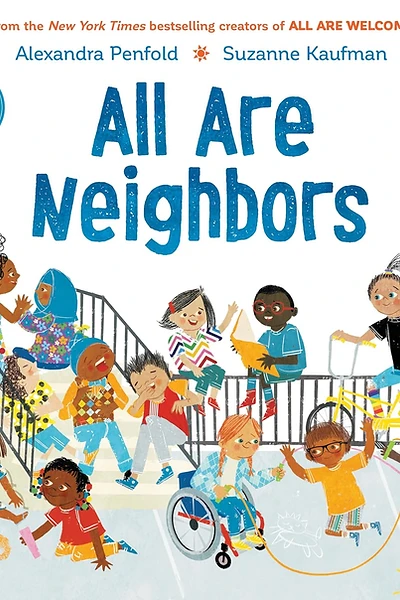
| Art & Graphics | Read: Notice how the illustrations in All Are Neighbors help tell the story of a diverse, caring neighborhood and add meaning beyond the words. The art supports pacing by letting readers linger on people, places, and actions. Classroom Activity: Draw a neighborhood scene and add one caption that matches the book’s theme of acceptance and belonging. |
| Interactives & Gamification | Read: Notice how this book invites participation by encouraging children to spot helpful actions, welcoming gestures, and community connections on each page. The story can become interactive when readers hunt for examples of belonging. Classroom Activity: Play a 'Find the Neighborly Act' game during rereading, then write one sentence beginning 'I noticed...' about the kindest action you found. |
Pace-Write It!
20-Minute Classroom Flow\nRead (5 min): Read All Are Neighbors by Alexandra Penfold aloud. Pause briefly to let students notice neighborhood scenes where people help, greet, include, and care for one another.\nNotice (5 min): Ask: 'How does the story move?' and 'What small actions show belonging?' Chart student ideas under these headings: words that repeat, kind actions, places in the neighborhood, and page turns that show something new.\nWrite (7 min): Students write their own short neighborhood piece inspired by the book. Writing frame: 'In my neighborhood, we _____. We _____. We help _____ feel welcome. All are neighbors when we _____.' Encourage students to add one specific place and one kind action.\nShare (3 min): Students read their writing to a partner or the class using a warm, welcoming voice. Invite listeners to name one word or line that showed belonging.\nExit ticket: Complete this sentence on a sticky note: 'One way I can be a good neighbor is _____.'