 2-5
2-5GN HORNER
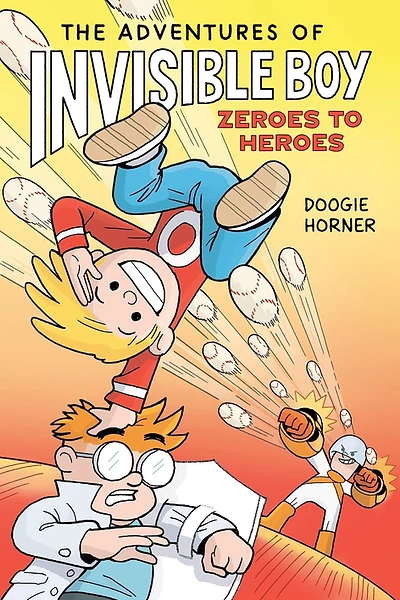
The Adventures of Invisible Boy: Zeroes to Heroes
by Doogie Horner
Pacing MaterialStanley and his friend Gene, the boy with blue skin, team up again — but this time they face a new challenge: can two kids with unusual abilities become the heroes their school needs?
Big Idea
True heroes aren't the strongest or most powerful — they're the ones who show up for their friends.
Discussion Questions
- 1.How do Stanley and Gene work together as a team?
- 2.What makes someone a hero?
- 3.How do the characters' differences become their strengths?
- 4.What does it mean to be a hero in everyday life?
Classroom Activity
Everyday Hero Profile
Students create a profile of an everyday hero in their life, explaining what makes them heroic.
Lesson Plan
Learning Goals
- Analyze how characters grow from zeroes to heroes
- Explore the qualities that make someone a hero
- Develop character description and profile writing
- Connect literary themes to real-life heroism
Activity Steps
- 1.Discuss how Stanley and Gene become heroes in the story
- 2.Have students identify an everyday hero in their life
- 3.Students create a hero profile with illustrations and descriptions
- 4.Share profiles and discuss what qualities make a hero
- 5.Reflect on how we can all be heroes in small ways
Standards Connections
- ELA: RL.2.1 — Ask and answer questions about key details
- ELA: RL.2.2 — Retell stories, including key details
- ELA: RL.2.3 — Describe characters, setting, and events
- ELA: RL.5.6 — Acknowledge differences in characters' points of view
- ELA: SL.2.1 — Participate in collaborative conversations about the text
- ELA: W.2.3 — Write narratives recounting events with descriptive details
- SEL: Relationship Skills
- SEL: Social Awareness
- Art: VA:Re7 — Perceive and analyze artistic work
Pace-Write-Read Study with Pace-Write It!
Focus question: How does an author and illustrator speed up or slow down a story to make friendship, humor, and hero moments feel exciting? In The Adventures of Invisible Boy: Zeroes to Heroes by Doogie Horner, Stanley and Gene face school-sized problems that turn into funny, action-filled challenges. The graphic novel uses quick panels, expressive dialogue, page turns, and visual surprises to control pacing and keep readers wondering how these unusual friends will become heroes.
| Element | How to notice or teach it in the novel |
|---|---|
| Pace | Read: Notice how Doogie Horner moves quickly through funny problem moments and then slows down for hero decisions between Stanley and Gene. Classroom Activity: Write a short comic scene where a school problem starts fast, then slows when two friends must choose a kind solution. |
| Plot | Read: Track how Stanley and Gene go from being unusual kids to trying to solve a bigger problem at school. Classroom Activity: Make a 5-step plot ladder labeled beginning, problem, plan, surprise, and hero moment for your own friendship story. |
| Prosody | Read: Even in a graphic novel, the sound of the dialogue helps pacing, especially in excited, worried, or funny lines spoken by Stanley, Gene, and classmates. Classroom Activity: Write 4 speech bubbles for a scene and read them aloud to match the feeling of each character. |
| Word pause | Read: Look for places where a single word, an ellipsis, or a short reaction slows the moment before something funny or important happens. Classroom Activity: Write 3 lines of dialogue that use a pause before a reveal, such as a hero plan or a kindness choice. |
| Concept | Read: The big concept is that kids who seem like zeroes can grow into heroes through friendship, courage, and kindness. Classroom Activity: Write a one-sentence story concept about an unexpected hero at school who helps a friend. |
| Voice & World View | Read: The book’s voice is playful, goofy, and warm, and it sees unusual kids like Stanley and blue-skinned Gene as important and capable. Classroom Activity: Write a paragraph in a humorous voice about a kid who feels different but notices something others miss. |
| Setting & Place | Read: Notice how the school setting creates many chances for quick problems, funny encounters, and teamwork. Classroom Activity: Draw and label a school place where your character will face a challenge, then write 3 sentences set there. |
| Point of View | Read: Pay attention to how the story lets readers stay close to Stanley and Gene so their worries and brave choices matter. Classroom Activity: Rewrite one school moment from Stanley’s point of view, then from Gene’s point of view. |
| Original Characters | Read: Stanley and Gene are memorable because their unusual qualities connect to both the humor and the heart of the story. Classroom Activity: Invent an original student character with one surprising trait and explain how that trait could help a friend. |
| Dialogue | Read: Study how the dialogue between Stanley and Gene builds friendship while also moving the action quickly. Classroom Activity: Write a comic conversation in which two friends disagree about a plan and then solve the problem kindly. |
| Details | Read: Small visual and story details help readers understand the school world, the jokes, and the growing hero theme. Classroom Activity: List 5 tiny details you could add to a school comic scene to show nervousness, kindness, or chaos. |
| Descriptions | Read: In this graphic novel, descriptions often come through both words and pictures, especially when showing Stanley, Gene, and the school around them. Classroom Activity: Write 4 vivid sentences describing a hallway scene before a big hero moment. |
| Strong First Lines | Read: Think about how a strong opening in a humorous graphic novel quickly introduces a problem, a strange detail, or a funny tone. Classroom Activity: Write 3 possible first lines for a story about kids who are not expected to be heroes. |
| Immediacy & Engagement | Read: The book pulls readers in by putting Stanley and Gene into active school trouble right away and making us care what they will do next. Classroom Activity: Write an opening sentence and one speech bubble that make readers want to turn the page. |
| Story Scenes & Summaries & Unique Structures | Read: Notice when Horner uses full scenes for important funny or heroic moments and when he speeds through less important parts. Classroom Activity: Write one part of your story as a detailed scene and one part as a quick summary. |
| Flashback & Flash Forward & Cliffhangers | Read: Watch for places where a chapter or page ending makes you wonder what will happen to Stanley, Gene, or their school challenge next. Classroom Activity: End a short comic page with a cliffhanger about a plan that might fail. |
| Tension & Suspense & Surprise | Read: Even in a funny story, tension grows when Stanley and Gene are unsure whether they can really help or be accepted as heroes. Classroom Activity: Write a paragraph that builds suspense before an unexpected act of kindness saves the day. |
| Page Turns and Chapter Breaks | Read: In a graphic novel, page turns and chapter breaks can hide a joke, reveal a problem, or make a hero moment feel bigger. Classroom Activity: Plan a 4-panel page and mark where you would place the page turn for the biggest surprise. |
| Performance | Read: The characters’ facial expressions, body language, and dramatic reactions make scenes feel performative and quick. Classroom Activity: Write stage directions or panel notes for how Stanley and Gene should look during a funny rescue attempt. |
| Personality | Read: Notice how Stanley and Gene’s personalities shape the pace of their choices, jokes, and friendship. Classroom Activity: Write a character card for one student hero, including habits, fears, and one kind strength. |
| Humor | Read: Humor in this book comes from unusual abilities, school situations, and the contrast between looking strange and doing something good. Classroom Activity: Write a humorous school scene where a character’s odd trait creates a problem and then solves it. |
| Pause | Read: Horner uses pause moments to let a joke land or to show Stanley and Gene thinking before acting. Classroom Activity: Write a 6-line comic script with one silent panel where the pause changes the meaning. |
| Poetry and Poetic Devices | Read: Even though this is a graphic novel, repeated sounds, playful word choice, and image patterns can create a poetic feeling. Classroom Activity: Write a short hero chant or slogan for Stanley and Gene using alliteration. |
| Repetition | Read: Repeated jokes, reactions, or ideas about being zeroes and heroes help build rhythm and theme. Classroom Activity: Write a short passage that repeats a key phrase 3 times to show a character gaining confidence. |
| Rhythm | Read: The rhythm of short panels, quick dialogue, and action beats helps the story feel energetic and funny. Classroom Activity: Create 5 short sentences in a row to mimic the fast rhythm of a comic chase through school. |
| Punctuation | Read: Exclamation points, question marks, ellipses, and bold comic-style lines help show energy, surprise, and timing in Stanley and Gene’s adventures. Classroom Activity: Rewrite one plain sentence 3 ways using different punctuation to change the pace. |
| Questions | Read: The story keeps readers asking whether Stanley and Gene can help, whether others will understand them, and what will happen next. Classroom Activity: Write 4 questions a reader might ask during your hero story, then answer one in the next sentence. |
| Compare-Contrast | Read: Compare Stanley and Gene’s unusual qualities, and contrast how others may see them with who they really are as friends and possible heroes. Classroom Activity: Make a T-chart comparing how a character appears on the outside and acts on the inside. |
| Objects | Read: Notice how school objects, everyday items, or visual clues can become important in funny or heroic scenes. Classroom Activity: Choose one classroom object and write how it could become the key to solving a problem. |
| Threes | Read: Humor often works well in groups of three, such as three attempts, three reactions, or three clues before a payoff. Classroom Activity: Write a scene where two friends try 3 times to fix a school problem, with the third try working. |
| Whitespace & Negative Space | Read: In a graphic novel, empty space around a panel or speech bubble can slow the reader down and spotlight an awkward, funny, or important moment. Classroom Activity: Sketch a simple panel plan and mark where blank space would make a reaction stronger. |
| Art & Graphics | Read: The drawings, panel sizes, and character expressions in Stanley and Gene’s story do pacing work just like words do. Classroom Activity: Storyboard 4 panels showing a problem, a pause, a plan, and a hero action. |
| Interactives & Gamification | Read: Think about how the book’s hero challenge structure feels a little like levels in a game, with Stanley and Gene facing obstacles and trying again. Classroom Activity: Design a simple 3-level school hero mission chart for your own characters, with a kindness goal at each level. |
Pace-Write It!
20-Minute Classroom Flow\nRead (5 min): Read aloud a short section from The Adventures of Invisible Boy: Zeroes to Heroes by Doogie Horner that shows Stanley and Gene facing a school problem, sharing dialogue, and moving toward a hero moment. Ask students to listen for places where the story speeds up and slows down.\nNotice (5 min): Students turn and talk: Where did the panels, dialogue, or page turn make the action feel fast? Where did a pause, expression, or short line slow the story down? Chart student ideas under Fast Pace and Slow Pace, connecting them to friendship, kindness, and humor.\nWrite (7 min): Students write their own short comic-style scene about two unusual friends solving a school problem. Writing frame: “At school, ____ and ____ noticed ____. First, they tried ____. ‘____!’ said ____. For one moment, everything stopped. Then ____ had an idea. Together, they ____. In the end, they were heroes because ____.” Encourage students to use one pause, one funny line, and one kind action.\nShare (3 min): Partners read their scene aloud with expression, showing where they would speed up and pause. Invite 1-2 students to share how they used pacing to make the hero moment stronger.\nExit ticket: Write one sentence answering: How did you use a fast part and a slow part in your scene to show friendship or kindness?