
 2-5
2-5GN HORNER
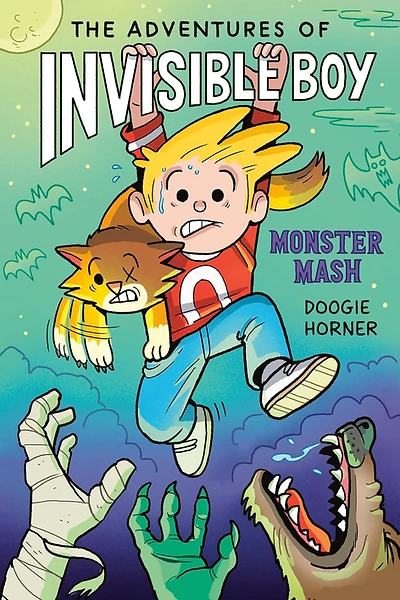
The Adventures of Invisible Boy: Monster Mash
by Doogie Horner
Pacing MaterialStanley and Gene face their spookiest adventure yet when mysterious monsters start appearing, and the invisible boy must confront his fears — both real and imaginary — to save the day.
Big Idea
Courage isn't the absence of fear — it's facing your fears with the help of good friends.
Discussion Questions
- 1.What fears does Stanley face in this story?
- 2.How do Stanley and Gene help each other when they're scared?
- 3.What makes something truly scary vs. just spooky?
- 4.How do you handle fear in your own life?
Classroom Activity
Monster Design Lab
Students design their own friendly monster, then write a story about facing a fear with a friend's help.
Lesson Plan
Learning Goals
- Analyze how characters confront and overcome fear
- Explore the role of friendship in building courage
- Create original characters and narratives
- Develop descriptive and creative writing skills
Activity Steps
- 1.Discuss how Stanley handles fear in the story
- 2.Have students design a friendly monster with a name and personality
- 3.Students write a short story about facing a fear with their monster's help
- 4.Share stories and discuss how friends help us be brave
- 5.Reflect on what courage really means
Standards Connections
- ELA: RL.2.1 — Ask and answer questions about key details
- ELA: RL.2.2 — Retell stories, including key details
- ELA: RL.2.3 — Describe characters, setting, and events
- ELA: RL.5.6 — Acknowledge differences in characters' points of view
- ELA: SL.2.1 — Participate in collaborative conversations about the text
- ELA: W.2.3 — Write narratives recounting events with descriptive details
- SEL: Relationship Skills
- SEL: Social Awareness
- Art: VA:Re7 — Perceive and analyze artistic work
Pace-Write-Read Study with Pace-Write It!
Focus question: How does an author and illustrator speed up or slow down a spooky story so readers feel both laughter and suspense? In The Adventures of Invisible Boy: Monster Mash by Doogie Horner, Stanley and Gene investigate strange monster appearances while facing fears, friendship problems, and silly surprises. The graphic-novel format uses quick panels, dramatic page turns, expressive dialogue, and visual jokes to control pacing and keep readers moving between spooky tension and humor.
| Element | How to notice or teach it in the novel |
|---|---|
| Pace | Read: Notice how Doogie Horner makes some moments move fast during monster chases and slows other moments when Stanley worries or tries to figure out what is real. The shifts in speed help readers feel both fear and fun. Classroom Activity: Write a 6-sentence scene where a character first hurries through a spooky hallway and then slows down to listen for a monster. |
| Plot | Read: Track how the plot grows from mysterious monster appearances to Stanley and Gene working through the problem together. Each new clue pushes the story forward and raises the stakes. Classroom Activity: Make a beginning-middle-end plot map for a new Invisible Boy adventure about a kindness problem at school. |
| Prosody | Read: Listen to how the words would sound aloud in dialogue, sound effects, and excited reactions as Stanley and Gene face spooky surprises. The rhythm of speech helps the story feel lively and dramatic. Classroom Activity: Write 4 speech bubbles and 2 sound effects for a monster scene, then read them aloud with expression. |
| Word pause | Read: Notice where single words, short phrases, or broken-up speech make you stop before the next reveal, especially when Stanley is nervous or shocked. These pauses stretch suspense in a funny way. Classroom Activity: Write a short comic exchange using dashes or line breaks to pause right before a silly monster reveal. |
| Concept | Read: The big concept in this book is that fears can feel huge, but friendship and kindness help characters face them. Stanley’s invisibility also connects to feeling unseen or uncertain while still being brave. Classroom Activity: Write 3 sentences explaining a fear your character has and how a friend helps them handle it. |
| Voice & World View | Read: The story’s voice feels playful, spooky, and kid-centered, showing the world as both scary and ridiculous at the same time. Stanley and Gene respond to danger in ways that match the book’s humorous view of problems. Classroom Activity: Write a paragraph in a funny-spooky voice about seeing something mysterious in the cafeteria. |
| Setting & Place | Read: Pay attention to where the monster mystery happens and how each place becomes more suspenseful because of shadows, corners, and the unknown. The setting helps pace scenes by making readers expect something to jump out. Classroom Activity: Describe a school, house, or neighborhood setting that could turn ordinary into spooky in 5 vivid sentences. |
| Point of View | Read: Notice how the story stays close to Stanley and his experience, so readers discover clues, worries, and surprises as he does. This point of view keeps suspense strong because we do not know everything ahead of time. Classroom Activity: Rewrite one spooky moment from Gene’s point of view and show what he notices differently. |
| Original Characters | Read: Stanley the Invisible Boy and Gene make a memorable pair because one faces hidden fears and the other adds energy, humor, and friendship. Their personalities shape the pace of every monster encounter. Classroom Activity: Invent an original side character for this world and write 4 traits, 1 fear, and 1 way they help Stanley. |
| Dialogue | Read: Study how dialogue between Stanley and Gene reveals friendship, worry, and jokes while moving the mystery along. Their talk often speeds scenes up because readers learn information quickly. Classroom Activity: Write an 8-line dialogue where Stanley and Gene disagree about whether a monster is real. |
| Details | Read: Small details in expressions, clues, and monster moments help readers follow the action and feel the mood. In a graphic novel, tiny visual details can do the work of many sentences. Classroom Activity: List 5 small details from a spooky scene you imagine, then use them in a short paragraph. |
| Descriptions | Read: Notice how descriptions in this graphic novel often come through both words and pictures, especially when monsters appear or Stanley reacts with fear. The descriptions are clear but quick, which keeps the pacing lively. Classroom Activity: Write 5 descriptive lines for a monster that is spooky at first but actually harmless. |
| Strong First Lines | Read: Think about how the opening quickly pulls readers into Stanley’s world and sets up mystery, humor, and action. A strong start makes readers want to keep turning pages. Classroom Activity: Write 3 possible first lines for a new chapter called The Locker Monster Mystery. |
| Immediacy & Engagement | Read: The book creates immediacy by dropping readers right into strange events and by showing Stanley’s reactions in the moment. Quick action and visual surprises keep readers engaged. Classroom Activity: Write a present-tense paragraph that begins with the words, Right now, Stanley hears... |
| Story Scenes & Summaries & Unique Structures | Read: Notice how some parts play out moment by moment as full scenes, while other parts move quickly through time to get to the next important event. The comic structure helps Horner balance action, summary, and jokes. Classroom Activity: Write one full scene of 5 sentences and one 2-sentence summary that skips ahead to the next clue. |
| Flashback & Flash Forward & Cliffhangers | Read: Look for places where the story hints at what might happen next or ends a page or section with a surprise that makes you keep reading. Even without long flashbacks, the book builds anticipation through cliffhanger moments. Classroom Activity: End a short scene with a cliffhanger line about Stanley opening a creaky door. |
| Tension & Suspense & Surprise | Read: Notice how mysterious monsters, hidden information, and Stanley’s fear build tension, while the humor keeps the suspense from becoming too scary. Surprises often arrive right after a pause or page turn. Classroom Activity: Write a 7-sentence suspense scene that includes 1 false alarm and 1 real surprise. |
| Page Turns and Chapter Breaks | Read: In a graphic novel, page turns matter because the next image can reveal a monster, a joke, or a clue. Chapter or section breaks also help control when readers get to rest and when suspense restarts. Classroom Activity: Plan a 4-panel comic and decide what the reader should not see until the page turn. |
| Performance | Read: The book feels performative because facial expressions, body language, and dramatic reactions make scenes easy to act out. Stanley’s fear and Gene’s energy would sound different in a read-aloud. Classroom Activity: Choose a scene and add stage directions in brackets for how Stanley and Gene should move and speak. |
| Personality | Read: Stanley’s personality shapes the pacing because his cautious, worried reactions can slow a moment down, while Gene’s confidence or excitement can speed it up. Their friendship works because they respond differently to the same problem. Classroom Activity: Write a character sketch showing how your hero acts differently from their best friend during a scary moment. |
| Humor | Read: Humor is a big part of Monster Mash, turning spooky situations into laugh-out-loud moments through dialogue, expressions, and silly misunderstandings. The jokes give readers a break from tension and make the pacing bounce. Classroom Activity: Write 3 humorous lines a character could say after mistaking an ordinary object for a monster. |
| Pause | Read: Notice the places where the story pauses on a face, a sound, or a moment of thinking before the action continues. These pauses help readers feel Stanley’s fear and expectation. Classroom Activity: Write a 5-line scene that uses a pause before the character discovers what made the strange noise. |
| Poetry and Poetic Devices | Read: Even in a humorous graphic novel, you can notice poetic devices like sound words, repeated phrases, and playful language that make scenes memorable. These choices add bounce and drama to the monster mystery. Classroom Activity: Write 4 lines about a monster using alliteration, such as creepy, creaky, crawling clues. |
| Repetition | Read: Watch for repeated reactions, sounds, or ideas about monsters and fear that help build rhythm and expectation. Repetition can make a scary thing funnier each time it appears. Classroom Activity: Write a short paragraph that repeats a phrase such as Not again! to build comedy and pacing. |
| Rhythm | Read: The rhythm of the book comes from quick panels, short lines, and bursts of action followed by slower reaction beats. That pattern helps readers move smoothly through suspense and jokes. Classroom Activity: Write 6 sentences that alternate between short action and longer reaction sentences. |
| Punctuation | Read: Exclamation points, question marks, ellipses, and bold comic-style emphasis help show fear, surprise, and humor in Stanley and Gene’s adventure. Punctuation changes how fast or dramatic a line feels. Classroom Activity: Write 5 speech bubbles about a monster encounter, using different punctuation in each one. |
| Questions | Read: The mystery grows because readers keep asking questions: Are the monsters real? What is Stanley missing? How will he and Gene solve this together? Questions help pull the story forward. Classroom Activity: Write 5 mystery questions a reader might ask during a new Invisible Boy chapter. |
| Compare-Contrast | Read: Compare Stanley’s fearful responses with Gene’s reactions, and compare spooky-looking monsters with what they may actually be. These contrasts create both humor and theme. Classroom Activity: Make a T-chart comparing Stanley and Gene during one monster scene, then write 3 compare-contrast sentences. |
| Objects | Read: Important objects in a mystery can become clues, red herrings, or joke setups. In this story, ordinary objects may look scary at first and then mean something different later. Classroom Activity: Choose one object, such as a flashlight, backpack, or mask, and write how it could first fool Stanley and later help solve the problem. |
| Threes | Read: Stories often use three tries, three clues, or three funny beats to build pacing, and you can look for places where events or reactions come in patterns. A set of three feels satisfying and easy to follow. Classroom Activity: Write a sequence in which Stanley checks 3 spooky places before finding the real clue. |
| Whitespace & Negative Space | Read: In a graphic novel, blank space around a panel or character can make a moment feel quiet, lonely, or suspenseful. Whitespace can slow the reader down before the next action or joke. Classroom Activity: Sketch or describe a single-panel moment with lots of empty space to show Stanley feeling small or nervous. |
| Art & Graphics | Read: The art in Monster Mash is essential to pacing because expressions, panel size, movement lines, and monster designs tell the story quickly. Pictures often deliver the joke or the scare before many words are needed. Classroom Activity: Draw or plan 3 panels showing a build-up, reveal, and reaction for a silly monster scene. |
| Interactives & Gamification | Read: Readers can interact with a graphic novel by predicting clues, reading sound effects dramatically, and hunting for visual hints in the art. This makes the mystery feel like a game as Stanley and Gene figure things out. Classroom Activity: Create a clue hunt with 3 hidden hints for classmates to use to solve a mini monster mystery. |
Pace-Write It!
20-Minute Classroom Flow\nRead (5 min): Read a short spooky-funny section from The Adventures of Invisible Boy: Monster Mash by Doogie Horner in which Stanley and Gene react to the monster mystery. Ask students to listen for where the story speeds up, slows down, and makes them want to turn the page.\nNotice (5 min): Discuss: Where did the panels, dialogue, or pauses create suspense? Where did humor break the tension? Chart student observations under Fast, Slow, and Surprise.\nWrite (7 min): Students write a short comic-style scene for a new Invisible Boy adventure in which Stanley and Gene hear a strange sound, worry about a monster, and discover something surprising but kind. Writing frame: Stanley and Gene were ____. Then they heard ____. Stanley felt ____ because ____. Gene said, "____!" They moved closer and saw ____. At first, they thought ____, but really it was ____. This shows friendship/kindness because ____.\nShare (3 min): Partners read their scenes aloud with expression, adding dramatic pauses and sound effects. Invite 2-3 students to share examples of where they slowed down a moment or added humor.\nExit ticket: In one sentence, explain one way Doogie Horner uses pacing in Monster Mash, and in one sentence, name one pacing move you used in your own writing.