 2-5
2-5R BRYANT
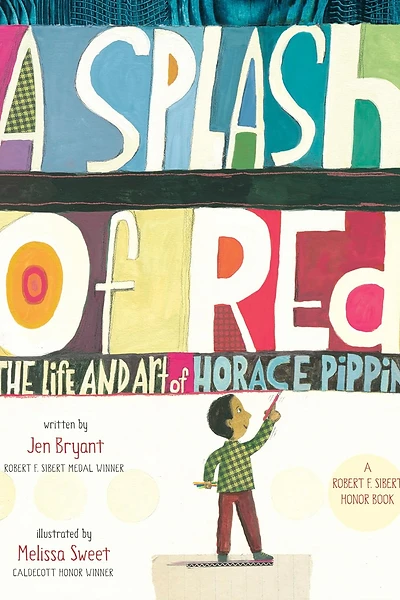
A Splash of Red: The Life and Art of Horace Pippin
by Jen Bryant
Pacing MaterialThe true story of Horace Pippin, a self-taught artist who overcame a war injury and poverty to paint the stories of his life.
Big Idea
Art can come from anywhere and anyone, and perseverance turns pain into beauty.
Discussion Questions
- 1.How did Horace teach himself to paint?
- 2.What obstacles did he overcome?
- 3.Why is 'a splash of red' important in his art?
- 4.How did his life show up in his paintings?
- 5.What would you paint from your own life?
Classroom Activity
My Splash of Color
Draw a scene from your life and add one bold splash of color that tells the viewer what matters most.
Lesson Plan
Learning Goals
- Identify key events in Horace Pippin’s life and explain how his experiences influenced his paintings.
- Use details from the biography to describe how Pippin persevered while living with poverty and a war injury.
- Create a drawing of a personal experience, using one bold splash of color to emphasize what matters most.
- Explain how an artistic choice communicates a memory, feeling, or idea.
Activity Steps
- 1.Read aloud A Splash of Red: The Life and Art of Horace Pippin. Pause to discuss what Pippin liked to draw, how his war injury affected him, and how he found ways to keep making art.
- 2.Revisit illustrations showing Pippin painting and examples of his artwork included in the book. Ask: Where does your eye go first? How can a small area of red draw attention to something important?
- 3.Invite students to choose a scene from their own lives, such as a family meal, a game, or a meaningful moment. Have them identify the person, object, or detail they most want viewers to notice.
- 4.Have students sketch their scenes in pencil and add details with pencil or black crayon. Then add one bold splash of a chosen color to highlight the important detail, leaving the rest mostly uncolored.
- 5.Ask students to write or dictate a brief artist statement: “My scene shows ___. My splash of ___ highlights ___ because ___.” Older students can add a sentence connecting their choices to Pippin’s use of personal experiences.
- 6.Hold a gallery walk or partner share. Invite classmates to notice each drawing’s focal point, then reflect together on how Pippin’s story shows that artists can come from many backgrounds and find different ways to create.
Standards Connections
- ELA: CCSS RI.2.3–RI.5.3 — Describe or explain relationships among events and ideas in a biography, including how Pippin’s experiences shaped his art.
- ELA: CCSS SL.2.1–SL.5.1 — Participate in collaborative discussions about the book and classmates’ artwork.
- Visual Arts: National Core Arts Standards, Anchor Standard 2 — Organize and develop artistic ideas through a personal scene and intentional color emphasis.
- Visual Arts: National Core Arts Standards, Anchor Standard 10 — Connect personal experiences to art-making.
- SEL: Self-awareness and self-management — Identify meaningful experiences and discuss perseverance and flexible approaches to challenges.
Pace-Write-Read Study with Pace-Write It!
Focus question: How does Jen Bryant pace Horace Pippin’s life story so readers can feel both his struggles and his determination? In A Splash of Red: The Life and Art of Horace Pippin, Jen Bryant tells the true story of a self-taught artist who kept creating even after poverty and a war injury changed his life. The book uses pacing by slowing down important moments, moving quickly through years of hardship, and pairing vivid language with artwork to highlight perseverance.
| Element | How to notice or teach it in the novel |
|---|---|
| Pace | Read: Notice how the story moves quickly across parts of Horace Pippin’s childhood and hard years, but slows down for powerful moments like drawing as a boy, being wounded in the war, and painting again. Classroom Activity: Write 4-5 sentences about a time a character keeps going through difficulty, using one sentence that speeds up time and one sentence that slows down an important moment. |
| Plot | Read: Track the main events in Horace Pippin’s life: loving art as a child, facing poverty, serving in war, hurting his arm, and finding a way to paint again. Classroom Activity: Make a short plot ladder with beginning, middle, and end, then write a summary of Horace’s story using those parts. |
| Prosody | Read: Listen to the musical flow of Jen Bryant’s language, especially where the sentences stretch or tighten to match Horace’s feelings and effort. Classroom Activity: Choose one page and read it aloud with expression, then write 3 original lines about a determined artist using a smooth, read-aloud rhythm. |
| Word pause | Read: Notice where strong words and line breaks in the text make you stop and think about Horace’s pain, patience, or courage. Classroom Activity: Write 3-4 sentences about Horace painting again, and place one intentional short sentence in the middle to create a pause. |
| Concept | Read: Think about the big idea that art can help a person tell a life story and keep going through hardship. Classroom Activity: Write a response explaining how Horace Pippin shows perseverance through art, using two details from the book. |
| Voice & World View | Read: Notice how the narration admires Horace’s grit and creativity while showing respect for his life as a Black artist, veteran, and worker. Classroom Activity: Write 4 sentences in a respectful biographical voice about someone who works hard to keep a talent alive. |
| Setting & Place | Read: Pay attention to how home, work, the battlefield, and Horace’s painting space shape what happens in his life. Classroom Activity: Choose one setting from the book and write a paragraph explaining how that place affected Horace’s choices or feelings. |
| Point of View | Read: Notice that the story is told in third person, helping readers see Horace’s life from childhood to adulthood while staying close to his experiences. Classroom Activity: Rewrite one event from the book in first person as if Horace is telling it himself. |
| Original Characters | Read: Although this is a true story, Horace stands out as a memorable real person because of his strong will, quiet creativity, and unusual way of teaching himself to paint again. Classroom Activity: Write a character sketch of Horace using 5 traits and evidence from the text. |
| Dialogue | Read: Notice the small moments of quoted speech, such as when Horace’s childhood art is noticed, and how dialogue highlights turning points. Classroom Activity: Create a short dialogue between Horace and a friend or family member after his injury about whether he will make art again. |
| Details | Read: Look for precise details about Horace scratching pictures, doing hard work, serving in war, and tying a brush to his injured arm. Classroom Activity: Write 5 detailed sentences describing one important moment from Horace’s life. |
| Descriptions | Read: Notice how Jen Bryant describes colors, movement, and feeling in ways that connect to Horace’s art, especially the title idea of red. Classroom Activity: Write a descriptive paragraph about one of Horace’s paintings or about him painting, using color words and sensory details. |
| Strong First Lines | Read: Study how the opening quickly introduces Horace’s urge to make pictures and draws readers into his story. Classroom Activity: Write 3 different opening lines for a biography about a child who discovers a talent. |
| Immediacy & Engagement | Read: Notice how the author keeps readers close to Horace by focusing on hands-on actions like drawing, marching, struggling, and painting. Classroom Activity: Write a short action scene about Horace beginning a painting again after his injury, using vivid verbs. |
| Story Scenes & Summaries & Unique Structures | Read: Notice how some parts feel like full scenes, while other years are summarized quickly so the story can cover Horace’s whole life. Classroom Activity: Write one 3-sentence scene from Horace’s life and one 2-sentence summary of several years. |
| Flashback & Flash Forward & Cliffhangers | Read: Notice how the biography mainly moves forward in time, but readers may think back to Horace’s early love of drawing when he later paints again. Classroom Activity: Write a paragraph that begins with grown-up Horace painting and then flashes back to him as a boy drawing pictures. |
| Tension & Suspense & Surprise | Read: Pay attention to the tension after Horace is wounded and readers wonder if he will ever create art again; the surprise is that he finds a way. Classroom Activity: Write 4-6 sentences that build suspense before revealing how Horace solved his problem. |
| Page Turns and Chapter Breaks | Read: Notice how turning the page can reveal a new hardship, a new stage of life, or a hopeful change in Horace’s journey. Classroom Activity: Plan a 4-page mini-biography and write what important reveal would happen on each page turn. |
| Performance | Read: Think about how this story could be performed aloud with changes in volume, speed, and pauses during moments of struggle and triumph. Classroom Activity: Mark one passage with slashes for pauses and arrows for where to read faster or slower, then perform it. |
| Personality | Read: Notice Horace’s personality traits: observant, hardworking, patient, and determined, shown through actions more than long explanations. Classroom Activity: Write a paragraph explaining which Horace trait is strongest and why. |
| Humor | Read: Notice that this book is mostly serious, but gentle childhood moments and Horace’s creative spirit can bring lightness to the story. Classroom Activity: Write a short memory from Horace’s childhood that adds warmth while still fitting the true story tone. |
| Pause | Read: Notice the emotional pauses after difficult events, especially after war injuries and during the wait before Horace paints again. Classroom Activity: Write a paragraph about a setback, adding an ellipsis or a very short sentence to create a thoughtful pause. |
| Poetry and Poetic Devices | Read: Listen for poetic language, imagery, and repeated sounds that make this biography feel lyrical and artistic, matching Horace’s paintings. Classroom Activity: Write 4 lines of free verse about Horace’s brush, colors, or injured arm using imagery. |
| Repetition | Read: Notice how ideas about drawing, painting, and not giving up repeat across Horace’s life, strengthening the theme of perseverance. Classroom Activity: Write a short paragraph that repeats a key phrase such as “He kept painting” to emphasize determination. |
| Rhythm | Read: Notice the rhythm of shorter and longer sentences, especially when the story shifts from hardship to hope. Classroom Activity: Write 5 sentences about Horace using a mix of short and long sentences to create rhythm. |
| Punctuation | Read: Study how punctuation helps shape meaning and pacing, especially commas, dashes, and periods that control the flow of Horace’s story. Classroom Activity: Write 4 sentences about Horace’s comeback and use at least two different punctuation marks for effect. |
| Questions | Read: Ask yourself questions the book raises, such as: What helps Horace continue? Why does art matter so much to him? Classroom Activity: Write 3 thoughtful questions about Horace Pippin and answer one using evidence from the text. |
| Compare-Contrast | Read: Compare Horace’s life before and after his injury, or compare his childhood sketching with his later painting. Classroom Activity: Write a compare-contrast paragraph using the frame “Before..., but after..., so...” about Horace’s art journey. |
| Objects | Read: Notice important objects such as pencils, brushes, Horace’s arm, and his paintings; these objects carry meaning in the story. Classroom Activity: Choose one object from the book and write how it symbolizes Horace’s perseverance. |
| Threes | Read: Look for places where ideas can be grouped in threes, such as three hardships Horace faced or three ways he showed courage. Classroom Activity: Write a sentence or short paragraph listing three challenges Horace overcame and explain which was hardest. |
| Whitespace & Negative Space | Read: Notice how the space on the page and the layout can slow readers down and give important moments room to breathe, much like space in art. Classroom Activity: Create a short illustrated page layout for one Horace moment, deciding where to leave blank space and why. |
| Art & Graphics | Read: Study how the illustrations support the text by echoing Horace Pippin’s artistic world, emotions, and important life stages. Classroom Activity: Sketch a scene from Horace’s life and add 3 labels explaining how your art supports the meaning of the text. |
| Interactives & Gamification | Read: Think about how readers can actively track Horace’s perseverance by noticing challenge-solution moments throughout the book. Classroom Activity: Make a “Perseverance Hunt” chart with two columns labeled Challenge and How Horace Responded, and fill it with at least four examples. |
Pace-Write It!
20-Minute Classroom Flow\nRead (5 min): Read aloud a section from A Splash of Red that shows Horace Pippin’s early love of art, his war injury, and the moment he returns to painting. Ask students to listen for places where the story speeds up and slows down.\nNotice (5 min): Discuss: Where did Jen Bryant summarize time quickly? Where did she slow down to spotlight an important moment? Chart student ideas under “Fast Pace” and “Slow Pace.” Point out how the pacing helps readers feel Horace’s perseverance.\nWrite (7 min): Students write a short biographical paragraph about Horace or about a made-up artist who faces a challenge. Writing frame: “At first, __________ loved to __________. Then, __________ made life hard. For a while, time passed and __________. But one day, __________. Slowly, carefully, __________. In the end, __________ showed perseverance by __________.” Encourage students to include one fast summary sentence and one slowed-down moment with details.\nShare (3 min): Partners read their paragraphs aloud and identify where the writing speeds up and where it slows down. Invite 1-2 students to share examples with the class.\nExit ticket: Write one sentence answering: How did pacing help you understand Horace Pippin’s perseverance?
Pace-Write-Read Connection
Teach this book using the Pace-Write-Read method — Tool 11: Details.
Open the Mastery Manual