
 K-3
K-3P COURTNEY
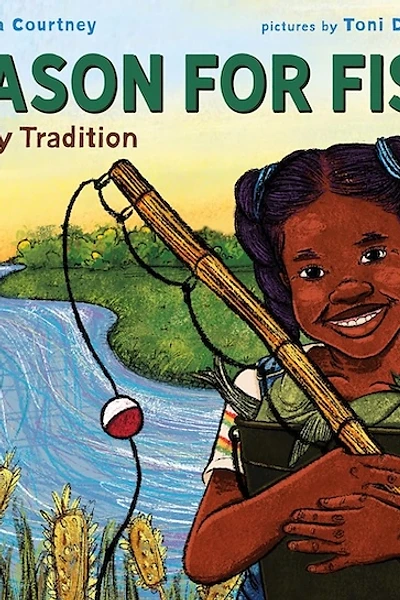
A Season for Fishin'
by Pamela Courtney
Pacing MaterialA young girl joins her family's fish fry tradition, learning patience, pride, and the joy of passing down heritage through food and fishing.
Big Idea
Family traditions connect us to our past and give us a sense of belonging.
Discussion Questions
- 1.What traditions does your family celebrate?
- 2.How does the girl feel when she catches her first fish?
- 3.Why are food and family important in our lives?
Classroom Activity
My Family Tradition Poster
Students illustrate a family tradition and write one sentence describing why it matters to them.
Lesson Plan
Learning Goals
- Identify a family tradition
- Express ideas through illustration and writing
- Understand the value of heritage
Activity Steps
- 1.Brainstorm family traditions as a class
- 2.Students choose one tradition to illustrate
- 3.Write one descriptive sentence about the tradition
- 4.Share posters in a gallery walk
Standards Connections
- ELA: RL.K.1 — Ask and answer questions about key details
- ELA: RL.K.2 — Retell stories, including key details
- ELA: RL.K.3 — Describe characters, setting, and events
- ELA: RL.3.6 — Acknowledge differences in characters' points of view
- ELA: SL.K.1 — Participate in collaborative conversations about the text
- ELA: W.K.3 — Write narratives recounting events with descriptive details
- SEL: Social Awareness
- SEL: Relationship Skills
- Art: VA:Re7 — Perceive and analyze artistic work
Pace-Write-Read Study with Pace-Write It!
Focus question: How does an author slow down and speed up moments to show why a family tradition matters? In A Season for Fishin' by Pamela Courtney, a young girl joins her family’s fishing and fish fry tradition and learns patience, pride, and belonging. Courtney uses pacing by stretching important family moments with sensory details and dialogue, then moving more quickly through connecting events so readers feel the rhythm of the day and the weight of tradition.
| Element | How to notice or teach it in the novel |
|---|---|
| Pace | Read: Notice how the story slows down during the girl’s fishing and fish fry experiences so we can feel her waiting, watching, and learning with her family. Classroom Activity: Write 3-4 sentences about a family tradition and intentionally slow down one important moment by adding what you saw, heard, and felt. |
| Plot | Read: Track how the girl moves from joining the family tradition to understanding its meaning, with fishing and the shared meal shaping the story’s beginning, middle, and end. Classroom Activity: Make a quick plot map with beginning, middle, and end, then write one new scene that could fit into the family’s fish fry day. |
| Prosody | Read: Listen for the smooth, storytelling sound that makes the family tradition feel warm, steady, and passed down through generations. Classroom Activity: Read one page aloud with expression, then write 2 sentences that sound good when spoken aloud about a special family moment. |
| Word pause | Read: Notice where the language makes you naturally pause, especially around important actions like waiting to catch fish or gathering for the meal. Classroom Activity: Write a 3-sentence mini-scene about waiting for something important and underline the words where a reader should pause. |
| Concept | Read: Think about the big idea that traditions teach more than skills—they teach patience, pride, and family heritage. Classroom Activity: Finish this sentence in writing: 'A family tradition matters because…' and add one example from your own life or imagination. |
| Voice & World View | Read: Notice how the story honors family knowledge and shows the child learning to value the wisdom of older relatives through fishing and cooking. Classroom Activity: Write in a voice that sounds respectful and proud as you describe an elder teaching a child how to do something important. |
| Setting & Place | Read: Pay attention to the fishing place and the family gathering space, and how those places help build the feeling of tradition. Classroom Activity: Write 4 sensory details about an outdoor place where a family tradition could happen. |
| Point of View | Read: Notice how the story lets us experience the family tradition through the young girl’s perspective as she learns and grows. Classroom Activity: Rewrite one family moment from the point of view of an older family member watching the child learn. |
| Original Characters | Read: Notice how the young girl and her family feel believable because their actions, patience, and pride connect to a specific tradition. Classroom Activity: Invent a child character who is joining a family tradition for the first time and list 3 traits that shape the scene. |
| Dialogue | Read: Listen for how family talk can guide, encourage, and pass down knowledge during fishing and the fish fry. Classroom Activity: Write 4 lines of dialogue between a child and a family member during a tradition, showing advice and encouragement. |
| Details | Read: Notice the small details connected to fishing, food, and family gathering that make the tradition feel real and meaningful. Classroom Activity: Create a detail list of at least 5 specific things you might notice during a family cooking or outdoor tradition, then use 3 in a paragraph. |
| Descriptions | Read: Study how descriptions can help readers picture the girl’s experience and understand why the day matters to her family. Classroom Activity: Write a descriptive sentence about food cooking and another about a child waiting quietly outdoors. |
| Strong First Lines | Read: Think about how a strong opening in a story about tradition should quickly invite readers into a special day with family. Classroom Activity: Write 3 possible first lines for a story about a family tradition, and make one line begin with action. |
| Immediacy & Engagement | Read: Notice how readers are pulled into the girl’s experience because the story focuses on what she is doing, noticing, and learning right now. Classroom Activity: Write 3 present-feeling sentences that make a reader feel they are right there beside a child during a tradition. |
| Story Scenes & Summaries & Unique Structures | Read: Notice how some parts of the family tradition would be shown as full scenes, while other parts move quickly as summary to keep the story flowing. Classroom Activity: Write one scene in 3-4 sentences about a big family moment, then one summary sentence that skips ahead to the next part of the day. |
| Flashback & Flash Forward & Cliffhangers | Read: Think about how this story’s tradition connects the present child to family history, even when the main action stays in the current moment. Classroom Activity: Write a sentence that flashes back to an earlier family tradition and a sentence that hints the child will one day teach someone else. |
| Tension & Suspense & Surprise | Read: Notice the quiet suspense in waiting—waiting for a catch, waiting to do things the right way, waiting to be included in an important family job. Classroom Activity: Write 3 sentences that build suspense during a child’s first try at a family tradition. |
| Page Turns and Chapter Breaks | Read: As a picture book, the page turns help hold attention by making readers want to see what happens next in the girl’s fishing and fish fry day. Classroom Activity: Plan a 4-page picture book idea and write the page-turn ending sentence for each page. |
| Performance | Read: Notice how this story could be performed with expression, pauses, and changes in tone to show patience, excitement, and family pride. Classroom Activity: Mark a short passage to show where a reader should pause, smile, or sound excited, then practice reading it aloud. |
| Personality | Read: Notice the young girl’s personality as she learns, watches, and grows more confident within her family tradition. Classroom Activity: Write 3 sentences that reveal a child character’s personality while they help with a family tradition. |
| Humor | Read: Look for gentle, warm moments that could make readers smile during a busy family gathering, even in a story centered on patience and pride. Classroom Activity: Add one funny but believable moment to a paragraph about a family meal or outdoor activity. |
| Pause | Read: Notice how pause is important in this book’s meaning because waiting is part of fishing, learning, and respecting the rhythm of tradition. Classroom Activity: Write a short paragraph where a pause changes the feeling of the moment, such as before a child succeeds. |
| Poetry and Poetic Devices | Read: Listen for lyrical language possibilities in a story about water, food, family, and memory, where sounds and images can feel poetic. Classroom Activity: Write 3 lines about a family tradition using imagery or alliteration, such as repeating beginning sounds. |
| Repetition | Read: Notice how repeated actions in a tradition—casting, waiting, cooking, gathering—can give the story a comforting pattern. Classroom Activity: Write a short piece that repeats a phrase like 'We wait' or 'My family always' to show tradition. |
| Rhythm | Read: Feel the rhythm created by the sequence of fishing, preparing food, and sharing the fish fry, which helps the story move like a familiar routine. Classroom Activity: Write 4 short sentences and 1 longer sentence to create a rhythm that matches a busy family day. |
| Punctuation | Read: Notice how punctuation could shape the pacing of excitement, quiet waiting, and family conversation in the story. Classroom Activity: Write one sentence with commas to slow the reading and one sentence with an exclamation point to show excitement during a tradition. |
| Questions | Read: Think about the questions readers may ask: Will the girl succeed? What will she learn? Why is this tradition so important to her family? Classroom Activity: Write 3 questions a reader might ask during the story, then answer one in a complete sentence. |
| Compare-Contrast | Read: Compare the slow waiting parts of fishing with the lively, social feeling of the fish fry to see how pacing changes across the book. Classroom Activity: Write 2 sentences comparing two parts of the same family tradition using the words 'both,' 'but,' or 'instead.' |
| Objects | Read: Notice how tools, food, and family objects connected to fishing and cooking can carry meaning because they are part of heritage. Classroom Activity: Choose one object from a family tradition and write 3 sentences explaining what it does and why it matters. |
| Threes | Read: Look for groups of three details that help ideas feel complete, such as what the girl sees, hears, and learns during the day. Classroom Activity: Write a sentence with 3 linked details about a tradition, such as 'We packed..., carried..., and waited...'. |
| Whitespace & Negative Space | Read: In a picture book, open space on the page can help a quiet moment feel larger, especially when the girl is waiting, watching, or reflecting. Classroom Activity: Plan a picture book page by writing one short sentence for the text and describing what open space the illustrator could leave. |
| Art & Graphics | Read: Think about how illustrations would deepen the feeling of family closeness, outdoor setting, and the colors and textures of the fish fry tradition. Classroom Activity: Sketch or describe an illustration for one scene and write a caption that matches the mood. |
| Interactives & Gamification | Read: Think about how readers could interact with the story by spotting tradition details, sequencing events, or matching tools to actions in the family’s fish fry day. Classroom Activity: Create a 5-step sequencing activity for the girl’s tradition and write one sentence for each step. |
Pace-Write It!
20-Minute Classroom Flow\nRead (5 min): Read aloud a key section of A Season for Fishin' by Pamela Courtney. Ask students to listen for parts that feel slow and calm, and parts that move more quickly.\nNotice (5 min): Discuss how the author stretches important moments in the girl’s family tradition with details about waiting, watching, fishing, and gathering for the fish fry. Chart two columns: 'Slowed Down' and 'Sped Up.'\nWrite (7 min): Students write their own short tradition moment. Writing frame: 'Every year, my family ____________. First, we ____________. I waited/watched/listened as ____________. Then, ____________. I felt ____________ because this tradition ____________.' Encourage students to slow down one moment with at least 3 sensory details.\nShare (3 min): Partners read their writing aloud and identify the sentence where the writer slowed the pacing the most.\nExit ticket: Write one sentence answering: 'Why did you slow down one part of your writing, and what did it help the reader understand?'