 K-2
K-2P LIKE-YOURS
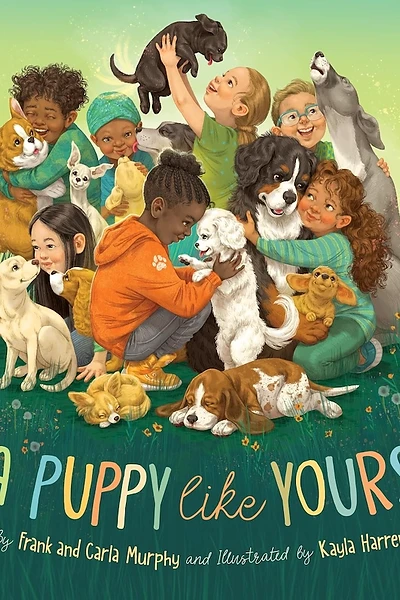
A Puppy Like Yours
by Frank and Carla Murphy, illustrated by Kayla Harren
Pacing MaterialA joyful celebration of the bond between children and their puppies — each one different, each one loved.
Big Idea
The bond between a child and a pet is built on care, patience, and love — and every pet is unique.
Discussion Questions
- 1.How do the children feel about their puppies?
- 2.What does it take to care for a pet?
- 3.Why is every pet unique?
- 4.What pet would you like to have and why?
Classroom Activity
Pet Profile
Students create a 'pet profile' — writing and illustrating a page about a pet they have or would like to have.
Lesson Plan
Learning Goals
- Describe the responsibilities of pet ownership.
- Write a short profile with key details.
- Express the bond between humans and animals.
- Illustrate an animal with distinguishing features.
Activity Steps
- 1.Read the book, noting the joy the puppies bring to the children.
- 2.Discuss what it means to care for a pet.
- 3.Students write and illustrate a pet profile.
- 4.Include the pet's name, breed, and one care responsibility.
Standards Connections
- ELA: RL.K.1 — Ask and answer questions about key details
- ELA: RL.K.2 — Retell stories, including key details
- ELA: RL.K.3 — Describe characters, setting, and events
- ELA: RL.2.6 — Acknowledge differences in characters' points of view
- ELA: SL.K.1 — Participate in collaborative conversations about the text
- ELA: W.K.3 — Write narratives recounting events with descriptive details
- SEL: Responsible Decision-Making
- Art: VA:Re7 — Perceive and analyze artistic work
Pace-Write-Read Study with Pace-Write It!
Focus question: How does an author slow down and speed up a story to show love, care, and responsibility? In A Puppy Like Yours by Frank and Carla Murphy, the authors celebrate many different children and many different puppies, showing how each friendship is special. The book uses pacing by moving quickly through joyful comparisons and repeated patterns, then slowing down to notice small actions, feelings, and responsibilities that help a child care for a puppy.
| Element | How to notice or teach it in the novel |
|---|---|
| Pace | Read: Notice how A Puppy Like Yours moves at a gentle, lively pace, introducing different puppies and children in short, flowing parts that keep the book upbeat while still making time for moments of care and connection. Classroom Activity: Write 3 short sentences about a child and a puppy, with 2 quick action sentences and 1 slower sentence that zooms in on a caring moment. |
| Plot | Read: The plot is simple and warm: children describe puppies that may look or act differently, but every puppy is loved and cared for. The story is less about one big problem and more about building the idea that responsibility is part of love. Classroom Activity: Make a beginning-middle-end organizer for an imaginary puppy story: meeting the puppy, caring for the puppy, and showing why the puppy is special. |
| Prosody | Read: Listen to the smooth, affectionate sound of the language in A Puppy Like Yours. The repeated phrasing and positive tone help the book sound musical and kind when read aloud. Classroom Activity: Read one page aloud with a partner, then write 2 lines about a puppy that are meant to sound gentle and joyful when spoken. |
| Word pause | Read: Notice where your voice naturally pauses to help each puppy trait and caring action stand out. These little pauses give readers time to picture the puppy and think about the bond between child and pet. Classroom Activity: Write one sentence about a puppy and mark 2 slash marks where a reader should pause for effect. |
| Concept | Read: The big idea in A Puppy Like Yours is that puppies are different, but all need love, patience, and responsible care. The concept grows through examples rather than a lecture. Classroom Activity: Finish this sentence in 3 different ways: 'A puppy needs ______ because ______.' |
| Voice & World View | Read: The voice is cheerful, loving, and inclusive, showing a world where many kinds of children and puppies belong. The authors present puppy care as a happy responsibility and celebrate differences with warmth. Classroom Activity: Write 4 sentences in a kind, welcoming voice about why your pretend puppy matters to you. |
| Setting & Place | Read: The illustrations and text suggest everyday places where children and puppies share life together, helping the story feel familiar and close to home. The ordinary settings support the theme that responsibility happens in daily moments. Classroom Activity: Describe a place where a child takes care of a puppy, such as a yard, living room, or park, using 3 sensory details. |
| Point of View | Read: The book speaks directly to the reader with the idea of 'your' puppy, which helps children imagine themselves in the story. This point of view makes the reading experience personal and immediate. Classroom Activity: Write 3 sentences beginning with 'My puppy...' to create a personal point of view. |
| Original Characters | Read: The children and puppies in A Puppy Like Yours feel fresh because each pair is shown as unique, with different looks, personalities, and ways of connecting. The originality comes from variety and loving details rather than from one main hero. Classroom Activity: Invent an original puppy character and an original child character, then list 3 traits for each. |
| Dialogue | Read: Even if the book is not driven by long conversations, readers can imagine what a child might say to comfort, train, or praise a puppy. This invites oral language and expressive reading. Classroom Activity: Write a 4-line dialogue between a child and a puppy owner, including one line about responsibility. |
| Details | Read: Small details about how puppies look, move, and connect with children help each page feel specific. These details build affection and help readers compare one puppy to another. Classroom Activity: Make a detail list of 5 things a reader might notice about one puppy's ears, paws, fur, bark, or tail. |
| Descriptions | Read: The descriptions in A Puppy Like Yours help readers picture puppies as playful, lovable, and individual. Description also supports the theme by showing that caring begins with really noticing your pet. Classroom Activity: Write 3 describing sentences about a puppy using color, size, and movement words. |
| Strong First Lines | Read: The opening quickly invites readers into a warm celebration of puppies and the special relationships children have with them. A strong beginning helps set the pace and the affectionate tone right away. Classroom Activity: Write 2 possible first lines for your own puppy book that make a reader want to keep reading. |
| Immediacy & Engagement | Read: Because the book addresses the idea of 'your' puppy, readers feel included immediately. Children can connect the text to their own pets, wishes, or experiences caring for animals. Classroom Activity: Write a sentence starter page with 'If I had a puppy, I would...' and complete it with 3 caring actions. |
| Story Scenes & Summaries & Unique Structures | Read: A Puppy Like Yours balances summary-like statements about many kinds of puppies with scene-like moments readers can picture clearly. This structure lets the book celebrate variety while keeping a steady pace. Classroom Activity: Write one summary sentence about puppies in general and one scene sentence showing one puppy licking a child's hand or following a child. |
| Flashback & Flash Forward & Cliffhangers | Read: This book does not rely on flashbacks or cliffhangers, which helps keep the tone calm and accessible for young readers. Still, readers can imagine before-and-after moments in a puppy friendship. Classroom Activity: Write 1 flashback sentence about when a puppy was younger and 1 flash-forward sentence about how the child will care for the puppy tomorrow. |
| Tension & Suspense & Surprise | Read: The story stays gentle instead of suspenseful, but there is a small feeling of anticipation as each new puppy is introduced and compared. The surprise comes from the many different ways puppies can be special. Classroom Activity: Write 2 sentences that begin with 'You might think my puppy is..., but really my puppy is...'. |
| Page Turns and Chapter Breaks | Read: In a picture book like A Puppy Like Yours, page turns help reveal new puppy traits, new child-puppy connections, and new visual comparisons. There are no chapters, so each turn helps control the pacing. Classroom Activity: Plan a 4-page mini-book and write what surprise or new detail will be revealed after each page turn. |
| Performance | Read: This book works well as a read-aloud because readers can change expression to match playful, proud, or tender moments. Performance helps bring out the loving rhythm of the text. Classroom Activity: Practice reading one page aloud with a happy voice for playful parts and a softer voice for caring parts, then write one sentence about which sounded best. |
| Personality | Read: Each puppy seems to have its own personality, and the children do too. Personality helps the book feel like a collection of real relationships instead of a list of animals. Classroom Activity: Write 4 short sentences about a puppy's personality using traits like bouncy, shy, brave, or cuddly. |
| Humor | Read: The humor is light and joyful, coming from puppy behavior, energy, and the lovable differences among dogs. This playful mood keeps the pacing bright and engaging. Classroom Activity: Write a funny but believable sentence about a puppy doing something silly during playtime. |
| Pause | Read: Pause after an especially loving or important idea so children can think about what responsibility looks like, such as feeding, helping, or staying patient with a puppy. Pauses let meaning settle in. Classroom Activity: Write 3 caring sentences about a puppy and circle the one where a reader should pause the longest. |
| Poetry and Poetic Devices | Read: The book's language has a poetic feel because of repetition, rhythm, and carefully chosen descriptive words. These devices make the celebration of puppies feel lyrical and memorable. Classroom Activity: Write a 3-line puppy poem using one repeated beginning, such as 'My puppy is...'. |
| Repetition | Read: Repetition helps unify the many examples in A Puppy Like Yours and reminds readers that every puppy-child bond matters. Repeated structures also support pacing by making the text predictable in a comforting way. Classroom Activity: Write 4 sentences that all begin with the same phrase, such as 'A puppy can...'. |
| Rhythm | Read: The rhythm of the text helps the story feel smooth and affectionate, like a list-song about puppies and their people. Rhythm supports read-aloud fluency and pacing. Classroom Activity: Clap the beats in one sentence from your writing, then revise it so it sounds smoother when read aloud. |
| Punctuation | Read: Punctuation helps show where to stop, pause, and speak with excitement or warmth. In a lively picture book, punctuation shapes the pacing of each sentence. Classroom Activity: Write 3 puppy sentences: one with a period, one with a question mark, and one with an exclamation mark. |
| Questions | Read: The book encourages readers to wonder about puppies they know and how each one is cared for. Questions can deepen thinking about responsibility, differences, and affection. Classroom Activity: Write 3 questions a child could ask before getting a puppy, including one about daily care. |
| Compare-Contrast | Read: A Puppy Like Yours is built on comparing and contrasting puppies and the children who love them. The book shows that differences in looks or behavior do not change how deeply a puppy can be loved. Classroom Activity: Use a T-chart to compare 2 puppies by size, fur, energy, and needs, then write 2 compare-contrast sentences. |
| Objects | Read: Puppy-care objects such as bowls, leashes, toys, beds, and brushes connect the theme of love to real responsibility. These objects help make caring actions visible. Classroom Activity: Choose 3 puppy-care objects and write one sentence about how each helps a child be responsible. |
| Threes | Read: Grouping ideas in threes can match the book's smooth, satisfying pacing. Three traits or three actions are easy for young readers to hear, remember, and imitate. Classroom Activity: Write a sentence naming 3 things your puppy loves and another sentence naming 3 ways you care for it. |
| Whitespace & Negative Space | Read: In picture books, open space on the page helps readers focus on the puppy, the child, and the key words. Whitespace can slow pacing just enough for readers to notice emotion and illustration details. Classroom Activity: Make a mini page with one short sentence and a simple puppy sketch, leaving lots of open space to highlight the idea. |
| Art & Graphics | Read: Kayla Harren's illustrations are essential to the pacing and meaning of A Puppy Like Yours because they show puppy expressions, child-puppy interactions, and many loving differences at a glance. The art adds warmth, humor, and detail that the text can move through quickly. Classroom Activity: Draw a child and puppy doing a responsible action, then label 3 visual details that support the theme. |
| Interactives & Gamification | Read: This book invites interactive reading because students can point out differences among puppies, match caring actions to puppy needs, and talk about which puppy reminds them of one they know. The playful comparisons make participation easy. Classroom Activity: Create a 'Puppy Care Match' with 4 cards showing puppy needs and 4 cards showing responsible actions, then write one sentence explaining a match. |
Pace-Write It!
20-Minute Classroom Flow\nRead (5 min): Read A Puppy Like Yours aloud, stopping briefly to let students notice repeated patterns, different puppies, and moments that show love and responsibility. Ask: 'What makes each puppy special?' and 'How do the children show they care?'\n\nNotice (5 min): Reread 2-3 pages. Guide students to notice how the text sometimes moves quickly through several puppy examples and sometimes slows down to highlight a caring action or loving detail. Chart student observations under 'Fast parts' and 'Slow parts.'\n\nWrite (7 min): Students write their own short 'A Puppy Like Mine' piece. Encourage them to include one quick list of traits and one slower, zoomed-in caring moment. Writing frame: 'My puppy is ______, ______, and ______. My puppy likes to ______. When my puppy needs me, I ______. I show responsibility by ______. My puppy is special because ______.'\n\nShare (3 min): Invite 2-3 students to read their writing aloud. After each share, ask listeners to name one fast-paced part and one slowed-down part.\n\nExit ticket: Complete this sentence on a sticky note: 'Authors slow down a story when they want readers to notice ______.'