 K-2
K-2P LIKE-YOURS
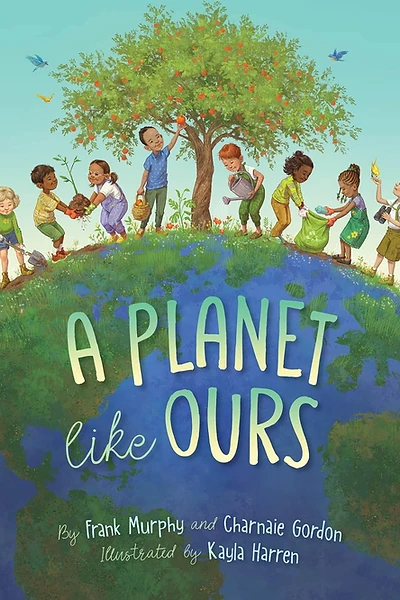
A Planet Like Ours
by Frank Murphy and Charnaie Gordon
Pacing MaterialThis book provides a gentle, encouraging look at our home planet and the responsibility children have to care for it. It serves as an accessible introduction to environmental stewardship and daily habits for conservation.
Big Idea
Every individual has the power to protect and care for our shared environment.
Discussion Questions
- 1.Why is it important to take care of the planet?
- 2.What are some things you see in nature that you love?
- 3.What does 'stewardship' mean to you?
- 4.What is one change you can make at home to help the Earth?
- 5.How does protecting the Earth help the animals and people living on it?
Classroom Activity
Earth Hero Classroom Audit
Students work together to identify ways to make their classroom more eco-friendly and implement a conservation plan.
Lesson Plan
Learning Goals
- Define environmental stewardship
- Identify sources of waste in the classroom
- Collaborate on a team-based conservation goal
Activity Steps
- 1.Discuss what it means to be an Earth Hero
- 2.Walk around the classroom looking for ways to save energy or reduce waste
- 3.Brainstorm three ways to improve habits
- 4.Create posters to remind the class of the new goals
- 5.Commit to one 'Earth Hero' action for the week
Standards Connections
- NGSS.ESS3.C
- SEL.CASEL.SocialAwareness
- National Core Arts Standard VA:Cr3.1
Pace-Write-Read Study with Pace-Write It!
Focus question: How does an author slow down and speed up a book to help us think about caring for Earth? A Planet Like Ours by Frank Murphy and Charnaie Gordon is a gentle picture book about our shared home planet and the small choices children can make to protect it. The pacing moves calmly through big ideas and everyday actions, giving young readers time to notice the message of environmental stewardship while keeping them engaged with encouraging, forward-moving language.
| Element | How to notice or teach it in the novel |
|---|---|
| Pace | Read: Notice how A Planet Like Ours moves at a calm, steady pace as Frank Murphy and Charnaie Gordon introduce Earth, then connect that big idea to simple conservation habits children can do. Classroom Activity: Write 3 short sentences that move from a big idea about Earth to one small action a child can take today. |
| Plot | Read: Notice that this book has an idea-based plot structure instead of one adventure story; it builds from appreciating our planet to feeling responsible for taking care of it. Classroom Activity: Make a beginning-middle-end chart showing 1) what the book teaches about Earth, 2) why caring matters, and 3) one action to help. |
| Prosody | Read: Listen to the smooth, reassuring way the text sounds when read aloud, matching the hopeful tone of the book’s message about helping the planet. Classroom Activity: Echo-read one page, then write a new line that sounds kind, calm, and encouraging. |
| Word pause | Read: Notice where you naturally pause after important words and ideas about Earth, responsibility, and everyday conservation choices. Classroom Activity: Choose one sentence from the book’s style and mark with slashes where a reader should pause, then write your own Earth-care sentence with pauses. |
| Concept | Read: The central concept is environmental stewardship—learning that our planet is precious and that children can help protect it through daily habits. Classroom Activity: Finish this sentence in your notebook: “Taking care of our planet means ________ because ________.” |
| Voice & World View | Read: Notice the book’s warm, inclusive voice and its world view that Earth belongs to all of us and everyone shares the job of caring for it. Classroom Activity: Write 2 sentences in a caring voice that begin with “We can…” to show a shared responsibility for the planet. |
| Setting & Place | Read: The setting is our planet Earth, presented as a shared home rather than one single town or room, which makes the message feel wide and welcoming. Classroom Activity: Draw and label one place on Earth from your life—home, school, park, or playground—and write one sentence about how to care for it. |
| Point of View | Read: Notice how the book speaks in a broad, child-friendly perspective that helps young readers see themselves as part of the story of caring for Earth. Classroom Activity: Write the same conservation idea two ways: once with “we” and once with “I,” then circle which feels stronger. |
| Original Characters | Read: Instead of one main fictional hero, the children and people connected to Earth function as the important “characters,” showing that any child can be a helper. Classroom Activity: Invent an Earth Helper character, give the character a name, and write 2 sentences about how they protect the planet. |
| Dialogue | Read: Even if the book is not built around long conversations, readers can imagine what children might say when they decide to recycle, save water, or care for nature. Classroom Activity: Write 2 lines of dialogue between two children who are helping the Earth: one line gives an idea, and one line agrees to help. |
| Details | Read: Notice the specific details about caring for the environment that make the big message feel doable for young children. Classroom Activity: List 4 small Earth-friendly actions from the book’s ideas, then choose 1 and write a sentence explaining it. |
| Descriptions | Read: The descriptions help Earth feel beautiful, important, and worth protecting, which supports the gentle tone of the text. Classroom Activity: Write 3 describing words for our planet and use them in one sentence: “Our planet is ___, ___, and ___.” |
| Strong First Lines | Read: Notice how the opening quickly introduces the importance of our planet and invites readers to care right away. Classroom Activity: Write a strong first line for your own mini-book about Earth that makes a reader want to keep listening. |
| Immediacy & Engagement | Read: The book keeps readers engaged by connecting a huge topic—our planet—to actions children can do now, making the message feel immediate. Classroom Activity: Write one sentence that starts with “Today I can…” and names an Earth-helping action. |
| Story Scenes & Summaries & Unique Structures | Read: A Planet Like Ours leans more on summary and idea-building than on one long scene, which helps the message move across many examples of stewardship. Classroom Activity: Write one summary sentence about the whole book, then add one tiny scene of a child helping Earth in one place. |
| Flashback & Flash Forward & Cliffhangers | Read: This book does not depend on flashbacks or cliffhangers, but readers can still think forward to the future of our planet if people care for it. Classroom Activity: Write 1 sentence that begins “If we care for Earth now, in the future…” |
| Tension & Suspense & Surprise | Read: The tension is gentle rather than scary; the big problem is that Earth needs our help, and the hopeful surprise is that children can make a difference. Classroom Activity: Write 2 sentences: first name a problem for Earth, then name a hopeful solution. |
| Page Turns and Chapter Breaks | Read: Notice how page turns in a picture book like A Planet Like Ours can separate one Earth-care idea from the next and keep readers curious. Classroom Activity: Fold a paper into 4 pages and plan one conservation idea for each page so the reader wants to turn to the next one. |
| Performance | Read: This text works well as a read-aloud because its message is sincere and its pacing gives readers moments to stress important ideas about the planet. Classroom Activity: Practice reading one sentence from your writing aloud with a gentle, persuasive voice. |
| Personality | Read: The book’s personality is hopeful, caring, and encouraging, helping environmental stewardship feel possible instead of overwhelming. Classroom Activity: Write 2 sentences about Earth using a hopeful personality, not a worried one. |
| Humor | Read: The tone is mostly earnest and warm, but students can notice that a light, cheerful moment could help children feel comfortable learning serious ideas about conservation. Classroom Activity: Write a friendly, silly line from a talking recycling bin or water drop that reminds children to help Earth. |
| Pause | Read: Notice where the book invites readers to pause and think about their own habits, such as what they do at home or school to care for the planet. Classroom Activity: After hearing a page, pause and complete this stem: “This part made me think about…” |
| Poetry and Poetic Devices | Read: The language has a simple, lyrical feel that supports the picture-book style and makes the ideas about Earth sound memorable. Classroom Activity: Write a short 2-line poem about Earth using personification, such as giving the planet a feeling or voice. |
| Repetition | Read: Notice repeated ideas about our planet, our responsibility, and the small actions that add up, which helps young readers remember the theme. Classroom Activity: Write 3 sentences that all begin with “We can…” to create your own repetition pattern. |
| Rhythm | Read: The rhythm of the text is smooth and measured, helping the message of care and responsibility feel steady and comforting. Classroom Activity: Clap the beat of one teacher-read sentence, then write your own sentence with a similar smooth rhythm. |
| Punctuation | Read: Notice how punctuation helps the reader know when to stop, think, and emphasize important ideas about protecting Earth. Classroom Activity: Write 2 Earth-care sentences—one with a period and one with an exclamation mark—and explain how the feeling changes. |
| Questions | Read: The book encourages readers to wonder about their role in helping the planet, even when every question is not directly asked. Classroom Activity: Write one question to ask your class about taking care of Earth, beginning with “How can we…?” |
| Compare-Contrast | Read: Readers can compare a healthy, cared-for planet with a neglected one, or compare helpful habits with wasteful habits. Classroom Activity: Make a T-chart labeled “Helps Earth” and “Hurts Earth,” then write 3 ideas in each column. |
| Objects | Read: Everyday objects connected to stewardship—such as paper, water, lights, reusable items, or trash and recycling containers—help turn the book’s big message into real life. Classroom Activity: Pick one object you use every day and write a sentence about how to use it in an Earth-friendly way. |
| Threes | Read: Notice how groups of three ideas or actions can make messages sound complete and memorable in a picture book about caring for our world. Classroom Activity: Write a set of 3 actions in one sentence: “We can ___, ___, and ___ to help Earth.” |
| Whitespace & Negative Space | Read: In a picture book, open space on the page can slow the reading down and help important words and illustrations about Earth stand out. Classroom Activity: Create one page with only 1 sentence about helping the planet and lots of empty space around it to show importance. |
| Art & Graphics | Read: The illustrations and design support the text by helping children visualize our planet and the caring actions that match the book’s hopeful message. Classroom Activity: Draw a picture to match one Earth-care sentence you wrote, making sure the art adds information not already in the words. |
| Interactives & Gamification | Read: The book naturally invites action because readers can turn its ideas into habits, checklists, and classroom challenges about stewardship. Classroom Activity: Create a 3-box “Earth Helper Challenge” card with one small action to do at home, one at school, and one outside. |
Pace-Write It!
20-Minute Classroom Flow\nRead (5 min): Read A Planet Like Ours by Frank Murphy and Charnaie Gordon aloud. Pause to emphasize lines about our shared planet and the small ways children can help care for Earth.\nNotice (5 min): Ask: “Where did the book slow down so we could think?” and “Where did the author move quickly through several Earth-helping ideas?” Chart student noticings such as repetition, calm rhythm, page turns, and the way big ideas connect to small actions.\nWrite (7 min): Students write a 3-sentence mini message about Earth using this frame: “Our planet is ____. We can ____ and ____ to help. When we care for Earth, ____.” Encourage students to use a hopeful tone like the book and include one specific conservation habit.\nShare (3 min): Turn and talk with a partner. Partners read their 3 sentences aloud and listen for one strong pacing move, such as repetition, a pause, or a strong ending.\nExit ticket: On a small slip, complete: “One small action I can do for our planet today is ____.”