
 1-4
1-4R MARCH
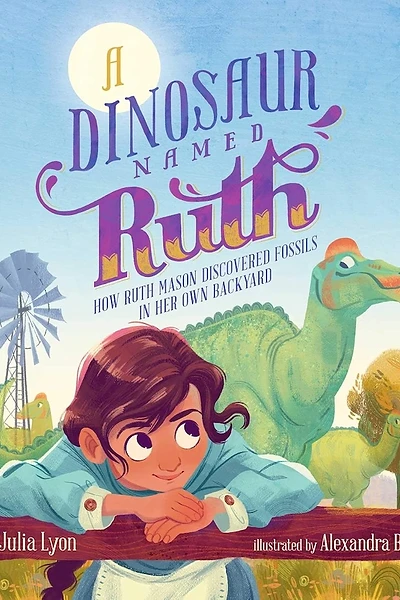
A Dinosaur Named Ruth: How Ruth Mason Discovered Fossils in Her Own Backyard
by Julia March
Pacing MaterialThe true story of Ruth Mason, who found dinosaur fossils in her own backyard and spent her life sharing them with the world.
Big Idea
Curiosity and persistence can turn a backyard discovery into a gift to science and the world.
Discussion Questions
- 1.What did Ruth find in her backyard?
- 2.How did Ruth share her discovery?
- 3.Why was her find important to science?
- 4.What would you do if you found a fossil?
- 5.How do paleontologists learn about the past?
Classroom Activity
Backyard Fossil Dig
Imagine finding a fossil in your backyard. Draw it, describe it, and write how you would share it with scientists.
Lesson Plan
Learning Goals
- Identify how Ruth Mason’s curiosity and persistence helped her discover dinosaur fossils and share them with the world.
- Explain that fossils provide clues about plants and animals that lived long ago.
- Draw an imagined backyard fossil and describe its observable features, such as shape, size, and texture.
- Write or dictate a message to a scientist explaining the discovery and asking a question about the fossil.
Activity Steps
- 1.Read aloud A Dinosaur Named Ruth. Pause to discuss what Ruth noticed in her backyard, how she kept investigating, and how she shared her discoveries. Ask students to point to details in the words or illustrations that show her curiosity and persistence.
- 2.Introduce fossils as preserved remains or traces of ancient life. Invite students to imagine discovering a fossil in their own backyard, just as Ruth did. Explain that their discoveries will be imaginary, not real fossils.
- 3.Have students draw their imagined fossil and its discovery location. Encourage them to add details such as ridges, footprints, or the outline of a bone, and label at least two visible features.
- 4.Ask students to describe the fossil using the prompts: 'I found it near…,' 'It looks like…,' and 'I wonder….' Grades 1–2 may dictate or write two to three sentences; grades 3–4 can write a paragraph that distinguishes what they observe from what they guess.
- 5.Have students write or dictate a short message to a scientist or museum. Include where they found the fossil, what they noticed, a question they want answered, and how they would share a drawing or photograph without disturbing the discovery site.
- 6.Create a classroom fossil gallery. Let partners share their drawings and messages, then name one way they could show curiosity and persistence like Ruth Mason.
Standards Connections
- ELA: CCSS RI.1.3 — Describe connections among individuals and events in an informational text, including Ruth’s discovery and her efforts to share fossils.
- ELA: CCSS W.2.2 — Write informative texts that introduce a topic and use facts or observations to develop points.
- ELA: CCSS SL.3.1 — Participate in collaborative discussions about the book and classmates’ imagined discoveries.
- Science: NGSS 3-LS4-1 — Build foundational understanding that fossils provide evidence about organisms and environments from long ago.
- SEL: Self-management — Recognize persistence in Ruth’s story and practice continuing a task when questions or challenges arise.
Pace-Write-Read Study with Pace-Write It!
Focus question: How does an author slow down and speed up a true story to help readers feel the excitement of discovery? In A Dinosaur Named Ruth: How Ruth Mason Discovered Fossils in Her Own Backyard by Julia March, readers follow the real-life story of Ruth Mason as an ordinary backyard turns into a place of amazing fossil discovery. The pacing moves between small, careful moments of noticing and bigger life-story summaries, helping readers feel both the surprise of finding bones and the importance of Ruth’s lifelong work sharing them.
| Element | How to notice or teach it in the novel |
|---|---|
| Pace | Read: Notice how Julia March paces Ruth Mason’s story by slowing down the fossil-finding moments and speeding through longer stretches of Ruth’s life so readers feel both discovery and time passing. Classroom Activity: Write 4-5 sentences about finding something surprising outside, using one sentence that slows the moment down and one sentence that jumps ahead in time. |
| Plot | Read: Notice the clear plot: Ruth is in her own backyard, discovers fossils, learns their importance, and shares them with others. Classroom Activity: Make a beginning-middle-end map for Ruth Mason’s story, then write your own short discovery plot with those three parts. |
| Prosody | Read: Listen to how the sentences sound when the class reads aloud the exciting discovery parts and the calmer explanatory parts about fossils and Ruth’s work. Classroom Activity: Read one page aloud with a partner, then write 3 sentences about a discovery, making one sentence sound quiet, one excited, and one proud. |
| Word pause | Read: Notice places where a strong word or short phrase about bones, fossils, or discovery makes readers pause and think. Classroom Activity: Write a 3-sentence mini-scene about finding something important and underline one word in each sentence where you want the reader to pause. |
| Concept | Read: Think about the big idea that discovery can happen in ordinary places and that curiosity can grow into lifelong learning, just as it did for Ruth Mason. Classroom Activity: Write 2-4 sentences explaining what Ruth’s story teaches about curiosity and why that idea matters. |
| Voice & World View | Read: Notice the respectful, wonder-filled voice that presents Ruth Mason as observant, persistent, and generous in sharing fossils with the world. Classroom Activity: Write from the point of view of a child who believes small discoveries can become big ideas, using a hopeful and curious voice. |
| Setting & Place | Read: Notice how the backyard setting matters because Ruth Mason’s great discovery happens in a familiar, everyday place. Classroom Activity: Describe your yard, park, sidewalk, or playground as if it might hide an amazing scientific discovery. |
| Point of View | Read: Notice that the book tells Ruth Mason’s real story from an outside narrator’s point of view, helping readers learn facts while staying close to Ruth’s experience. Classroom Activity: Rewrite one moment from the story as if Ruth herself is telling it in first person: “I looked down and saw…” |
| Original Characters | Read: Notice how Ruth Mason stands out as a real person whose curiosity and persistence make her memorable, even though the story is nonfiction. Classroom Activity: Create a short character sketch of Ruth with 3 traits and evidence from her fossil discoveries and sharing work. |
| Dialogue | Read: Notice whether spoken words are used sparingly and how nonfiction can still suggest what people may have said or wondered during a discovery. Classroom Activity: Write 4 lines of dialogue between Ruth and a family member when she first realizes the bones might be special. |
| Details | Read: Notice the specific details about fossils, bones, the backyard, and Ruth’s actions that make the true story believable and vivid. Classroom Activity: List 5 exact details from the book, then use at least 3 of them in your own nonfiction-style paragraph about a discovery. |
| Descriptions | Read: Notice how descriptions help readers picture the ground, the fossils, and Ruth’s careful attention. Classroom Activity: Write 3 descriptive sentences about an object partly hidden in dirt, grass, or rock, using color, shape, and texture words. |
| Strong First Lines | Read: Notice how the opening invites readers into a true story of surprise and discovery, making them want to know what Ruth Mason found. Classroom Activity: Write 3 different first lines for a true story about finding something unusual in an everyday place. |
| Immediacy & Engagement | Read: Notice how the book makes readers feel close to Ruth’s moment of noticing, as if they are there in the backyard with her. Classroom Activity: Write a “right now” scene using words like saw, bent, brushed, and stared so the reader feels inside the moment. |
| Story Scenes & Summaries & Unique Structures | Read: Notice how some parts are close-up scenes, like the discovery, while other parts summarize Ruth Mason’s later life and how she shared fossils with others. Classroom Activity: Write one detailed scene of 3-4 sentences and one 2-sentence summary that jumps ahead to tell what happened next. |
| Flashback & Flash Forward & Cliffhangers | Read: Notice whether the story hints ahead to why Ruth’s backyard find mattered so much, creating forward-looking interest in her future work with fossils. Classroom Activity: Write a flash-forward sentence after a discovery scene, such as “She did not know it yet, but this find would…” |
| Tension & Suspense & Surprise | Read: Notice the surprise that such an important fossil discovery happened in Ruth Mason’s own backyard and how readers keep wondering what she has found. Classroom Activity: Write 4 suspenseful sentences about uncovering something mysterious, ending with the reveal. |
| Page Turns and Chapter Breaks | Read: Notice where an illustration, fact, or discovery moment might make you want to turn the page quickly to learn more about Ruth and the fossils. Classroom Activity: Design a 2-page mini-book spread so page 1 ends with a reason to turn the page. |
| Performance | Read: Notice how this true story could be read aloud with changes in speed and expression during exciting discovery parts and calmer explanatory parts. Classroom Activity: Mark a short passage with slash marks for pauses and arrows for where your voice should speed up or slow down. |
| Personality | Read: Notice how Ruth Mason’s personality comes through as curious, patient, and committed to sharing knowledge with others. Classroom Activity: Write a short paragraph showing your own personality through a moment when you noticed something others missed. |
| Humor | Read: Notice that the story may not be told as a joke, but there is delight in the surprising idea that a dinosaur fossil could be waiting in an ordinary backyard. Classroom Activity: Write a light, playful sentence or two about the unexpected place where a huge prehistoric clue was found. |
| Pause | Read: Notice where the story invites a pause for wonder, especially when Ruth realizes the bones are not ordinary rocks. Classroom Activity: Write a short paragraph and include one very short sentence for emphasis, such as “It was a bone.” |
| Poetry and Poetic Devices | Read: Notice any sound words, repeated ideas, or image-rich language that make Ruth Mason’s true story feel full of wonder. Classroom Activity: Write a 4-line poem about fossils underground using imagery and one example of alliteration. |
| Repetition | Read: Notice if words or ideas such as discovery, bones, fossils, or sharing knowledge repeat to strengthen the theme of curiosity. Classroom Activity: Write 5 sentences about exploring outdoors and repeat one key phrase two or three times for effect. |
| Rhythm | Read: Notice how shorter sentences can make the discovery feel quick and exciting, while longer sentences can explain Ruth Mason’s work and the science behind fossils. Classroom Activity: Write one short-short-long sentence pattern about uncovering an object in the ground. |
| Punctuation | Read: Notice how punctuation helps control pacing, especially periods for stopping, commas for slowing, and exclamation points for surprise in a discovery story. Classroom Activity: Take the same sentence about Ruth finding a fossil and rewrite it three ways with different punctuation to change the pace. |
| Questions | Read: Notice the questions readers may ask: What did Ruth see? How did she know it mattered? What happened after the discovery? Classroom Activity: Write 3 wondering questions Ruth might have asked when she first found the fossils, then answer one in complete sentences. |
| Compare-Contrast | Read: Notice the contrast between an ordinary backyard and an extraordinary fossil site, and between one moment of finding and a lifetime of sharing. Classroom Activity: Write a compare-contrast paragraph using the frame “At first… But later…” about Ruth Mason’s backyard. |
| Objects | Read: Notice how the fossils themselves are important objects that carry the whole story, turning from buried bones into clues about the past. Classroom Activity: Choose one object from nature and write 3-5 sentences explaining why it might matter in a true story. |
| Threes | Read: Notice how ideas can be grouped in threes to make them memorable, such as Ruth being curious, careful, and generous. Classroom Activity: Write a sentence with three strong describing words for Ruth Mason, then write another sentence with three actions she took. |
| Whitespace & Negative Space | Read: Notice how open space on a page can slow a reader down and give room to think about a big moment, such as Ruth’s discovery. Classroom Activity: Create a one-page piece of writing with only 3-4 sentences and extra space between them to make the moment feel important. |
| Art & Graphics | Read: Notice how illustrations or visual features help readers picture Ruth Mason, the backyard, and the fossils, adding pacing by letting readers stop and look closely. Classroom Activity: Draw and label a backyard fossil scene, then add 3 nonfiction captions. |
| Interactives & Gamification | Read: Notice how this story invites active learning because readers can hunt for clues, facts, and discovery moments just like young paleontologists. Classroom Activity: Make a “Fossil Clue Hunt” page with 4 clues from Ruth Mason’s story and a final writing challenge: explain what makes her discovery important. |
Pace-Write It!
20-Minute Classroom Flow\nRead (5 min): Read aloud a key part of A Dinosaur Named Ruth: How Ruth Mason Discovered Fossils in Her Own Backyard by Julia March that shows Ruth noticing and finding fossils. Ask students to listen for where the story slows down and where it jumps ahead.\nNotice (5 min): Chart two columns: “Slow moment” and “Fast moment.” Students name one sentence or page that zooms in on Ruth’s backyard discovery and one part that summarizes her later life sharing fossils. Discuss: Why did Julia March slow down here? Why speed up there?\nWrite (7 min): Students write their own short true-or-pretend discovery scene. Writing frame: “One day, I was __________. Then I noticed __________. I stopped. I looked closely at __________. At first, I thought __________. But then I realized __________. Later, __________.” Encourage students to use one short sentence for pause and one sentence that jumps ahead in time.\nShare (3 min): Partners read their pieces aloud and point out one place where the writer slowed the action and one place where the writer sped it up. Invite 1-2 volunteers to share with the class.\nExit ticket: Write one sentence answering: How did Julia March use pacing to make Ruth Mason’s discovery feel exciting and important?
Pace-Write-Read Connection
Teach this book using the Pace-Write-Read method — Tool 11: Details.
Open the Mastery Manual