
 K-2
K-2P UNDERWOOD
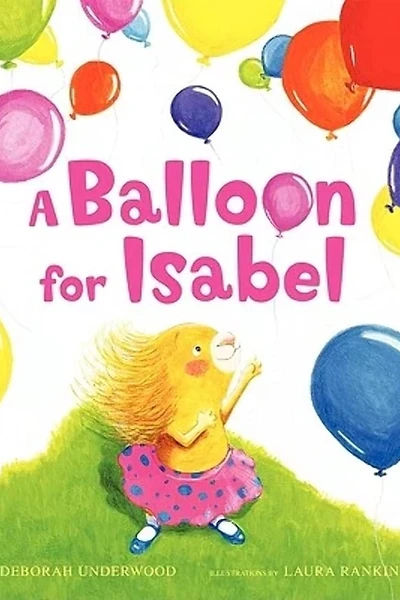
A Balloon for Isabel
by Deborah Underwood
Pacing MaterialIsabel the porcupine desperately wants a balloon for graduation, but her sharp quills keep popping them — until she finds a creative solution.
Big Idea
Creative problem solving can turn a frustrating situation into a success.
Discussion Questions
- 1.Why couldn't Isabel have a balloon at first?
- 2.How did Isabel solve her problem?
- 3.What would you do if you couldn't have something you really wanted?
Classroom Activity
Balloon Problem-Solving
Students identify a problem, brainstorm three solutions, and illustrate the best one.
Lesson Plan
Learning Goals
- Practice problem-solving strategies
- Understand cause and effect
- Write a sequence of events
Activity Steps
- 1.Read the story and identify Isabel's problem
- 2.Discuss how Isabel brainstormed solutions
- 3.Students choose a personal problem and list three solutions
- 4.Illustrate the best solution
Standards Connections
- ELA: RL.K.1 — Ask and answer questions about key details
- ELA: RL.K.2 — Retell stories, including key details
- ELA: RL.K.3 — Describe characters, setting, and events
- ELA: RL.2.6 — Acknowledge differences in characters' points of view
- ELA: SL.K.1 — Participate in collaborative conversations about the text
- ELA: W.K.3 — Write narratives recounting events with descriptive details
- SEL: Social Awareness
- SEL: Relationship Skills
- Art: VA:Re7 — Perceive and analyze artistic work
Pace-Write-Read Study with Pace-Write It!
Focus question: How does an author slow down or speed up a story to show a character solving a problem? In A Balloon for Isabel by Deborah Underwood, Isabel the porcupine wants a graduation balloon, but her quills keep popping every balloon she tries to hold. The pacing helps readers feel each failed attempt, pause with Isabel’s disappointment, and then enjoy the creative solution at just the right moment.
| Element | How to notice or teach it in the novel |
|---|---|
| Pace | Read: Notice how the story moves quickly through Isabel’s wish for a balloon, then slows down during each popping problem so readers can feel her frustration and hope. Classroom Activity: Write 3 short sentences that speed through a character’s wish, then 3 longer sentences that slow down the problem. |
| Plot | Read: Track the clear plot in Isabel’s story: she wants a balloon, her quills pop balloons, she keeps trying, and she finds a smart solution for graduation. Classroom Activity: Write a beginning-middle-end plot for a character who has a problem with an object and solves it creatively. |
| Prosody | Read: Listen to how the story sounds when read aloud, especially in moments when Isabel’s excitement changes to disappointment after a pop. Classroom Activity: Read one page aloud with a partner and mark where your voice should sound excited, quiet, or surprised, then write 2 lines for a new scene with matching expression. |
| Word pause | Read: Notice the places where a word, a short sentence, or the idea of a pop makes you stop for a moment and feel Isabel’s disappointment. Classroom Activity: Write 4 sentences about a problem and include 2 places where a one-word sentence creates a pause. |
| Concept | Read: Think about the big idea that problem solving means trying again and being creative when the first plan does not work. Classroom Activity: Write about a time a character cannot use something in the usual way and must invent a new way, like Isabel does with the balloon. |
| Voice & World View | Read: Notice the gentle, warm, humorous voice that treats Isabel seriously while also showing the funny problem of a porcupine wanting a balloon. Classroom Activity: Write 5 sentences in a kind, playful voice about an animal with a tricky graduation problem. |
| Setting & Place | Read: Look for how the graduation setting makes Isabel’s wish feel important because a balloon is part of the celebration she wants to join. Classroom Activity: Write a short scene set at a class party, parade, or graduation where the setting makes the problem bigger. |
| Point of View | Read: Notice that readers stay close to Isabel and mainly experience the balloon problem through what she wants, tries, and feels. Classroom Activity: Rewrite one balloon-popping moment from the point of view of the balloon or a classmate watching Isabel. |
| Original Characters | Read: Isabel stands out as an original character because she is a porcupine whose quills create a very specific and funny problem. Classroom Activity: Invent an animal character with one special body feature that causes a story problem, and write 3 sentences introducing the character. |
| Dialogue | Read: Pay attention to how any spoken words help show Isabel’s personality, the graduation situation, and the reactions around her. Classroom Activity: Write a 4-line dialogue between Isabel and a friend who is trying to help her think of a balloon solution. |
| Details | Read: Notice the small details about balloons, quills, and graduation that make Isabel’s problem easy to picture. Classroom Activity: Make a list of 5 small details for a story about a character handling a fragile object. |
| Descriptions | Read: Look at how the story describes Isabel’s actions and feelings so readers can imagine each attempt and each pop. Classroom Activity: Write 3 descriptive sentences showing a character trying to carry something delicate without breaking it. |
| Strong First Lines | Read: Notice how the opening quickly introduces Isabel and her balloon wish so the problem arrives early. Classroom Activity: Write 2 different first lines for a story about a character who wants something that is hard for them to have. |
| Immediacy & Engagement | Read: See how the story keeps readers engaged because the problem matters to Isabel right away and readers want to know if she will ever get a balloon. Classroom Activity: Write 3 sentences that make a reader care immediately about a character’s important wish. |
| Story Scenes & Summaries & Unique Structures | Read: Notice how some moments feel like full scenes, such as Isabel trying with the balloon, while other parts move more quickly to carry the story forward. Classroom Activity: Write one detailed scene of a failed try and one quick summary sentence of what happened next. |
| Flashback & Flash Forward & Cliffhangers | Read: This story is mostly told in order, so think about how staying in the moment keeps the focus on Isabel’s next attempt and the reader’s curiosity. Classroom Activity: Add a cliffhanger ending to a page by writing a final line such as what happened just before the next pop or just before the solution is revealed. |
| Tension & Suspense & Surprise | Read: Notice the tension each time Isabel gets near a balloon because readers know her quills might pop it again, and the final solution brings a satisfying surprise. Classroom Activity: Write 5 sentences that build suspense as a character carefully tries something that might go wrong. |
| Page Turns and Chapter Breaks | Read: Because this is a picture book, page turns help hold suspense—readers turn the page to see whether Isabel’s next idea will work. Classroom Activity: Plan a 4-page mini-book and end each page with a line that makes readers want to turn the page. |
| Performance | Read: Notice how the popping moments and Isabel’s reactions are perfect for dramatic read-aloud performance with sound and expression. Classroom Activity: Perform one short scene from the book with a partner, then write stage directions like pop, gasp, or sigh for your own problem-solving scene. |
| Personality | Read: Isabel’s personality shows persistence, determination, and creativity because she does not give up on her graduation dream. Classroom Activity: Write 4 sentences showing a character’s personality through actions, not just by saying the trait words. |
| Humor | Read: The book uses gentle humor because the idea of a porcupine trying to keep a balloon safe is both sweet and funny. Classroom Activity: Write a funny problem for an animal character where the animal’s natural body feature causes trouble. |
| Pause | Read: Notice where the story pauses after each problem so readers can sit with Isabel’s feelings before the next try begins. Classroom Activity: Write a short paragraph and include one pause by adding a very short sentence after a big event. |
| Poetry and Poetic Devices | Read: Listen for playful sound and simple repeated language that make the story satisfying to hear, even though it is prose. Classroom Activity: Write 3 lines about a balloon using sound words or alliteration, such as bouncy blue balloon. |
| Repetition | Read: Notice how repeated attempts and repeated popping create a pattern that builds pacing and helps readers predict the problem. Classroom Activity: Write a pattern story with 3 repeated tries and a different ending on the last try. |
| Rhythm | Read: Hear the rhythm created by setup, try, pop, reaction, and try again in Isabel’s story. Classroom Activity: Write 4 short lines that follow this rhythm: want, try, fail, think. |
| Punctuation | Read: Look for punctuation that helps show excitement, surprise, and stopping points during Isabel’s balloon troubles. Classroom Activity: Write 5 sentences about a celebration problem and use a question mark, exclamation mark, and commas to control the pace. |
| Questions | Read: As you read, ask questions like: Will Isabel give up? What else could she try? How will she hold a balloon with quills? Classroom Activity: Write 3 reader questions and 1 character question for a story about solving a difficult problem. |
| Compare-Contrast | Read: Compare Isabel’s first unsuccessful tries with her final successful solution to see how the pacing changes from frustration to joy. Classroom Activity: Write 2 sentences comparing a failed attempt and 2 sentences contrasting it with the successful solution. |
| Objects | Read: The balloon is the key object in the story, and Isabel’s quills are another important object-like feature that drives the whole problem. Classroom Activity: Choose one important object for a story and write how that object helps create both the problem and the solution. |
| Threes | Read: Notice how stories for young readers often feel strong when a character tries more than once before success, and think about how Isabel’s repeated efforts create that pattern. Classroom Activity: Write a story plan with 3 tries: first fail, second fail, third solve. |
| Whitespace & Negative Space | Read: In a picture book like this one, space on the page can slow readers down and make Isabel’s feelings or a popping moment stand out. Classroom Activity: Make a mock picture-book page and leave space around one important sentence to give it extra power. |
| Art & Graphics | Read: Pay attention to how the illustrations help pace the story by showing Isabel’s expressions, the balloons, and the graduation moments in ways the words do not fully explain. Classroom Activity: Draw a quick sketch for one page of your story and add one sentence that matches the picture’s mood. |
| Interactives & Gamification | Read: Think about how readers can interact by predicting whether each new balloon plan will pop or work, almost like a guessing game. Classroom Activity: Create a 3-choice chart for a character’s problem and have classmates guess which choice will solve it before you reveal the ending. |
Pace-Write It!
20-Minute Classroom Flow\nRead (5 min): Read A Balloon for Isabel aloud. Pause at each balloon attempt and ask students to listen for places where the story speeds up and slows down.\nNotice (5 min): Chart what students notice: Isabel’s wish, each failed try, the popping moments, and the final creative solution. Discuss how repeated tries slow the middle of the story and build suspense.\nWrite (7 min): Students write their own short problem-solving scene about a character who wants something fragile or special but has trouble because of who they are. Writing frame: “___ wanted ___. But every time ___ tried to ___, ___. First, ___. Pop!/Oh no!/It didn’t work. Next, ___. Finally, ___ had an idea. ___.” Encourage students to include 3 tries and a final solution.\nShare (3 min): Partners read their scenes aloud and use expression to show the pacing, especially at the problem and solution moments. Invite 1-2 students to share how they slowed down an important part.\nExit ticket: Write one sentence answering: How did repeating Isabel’s problem help make the ending more exciting?